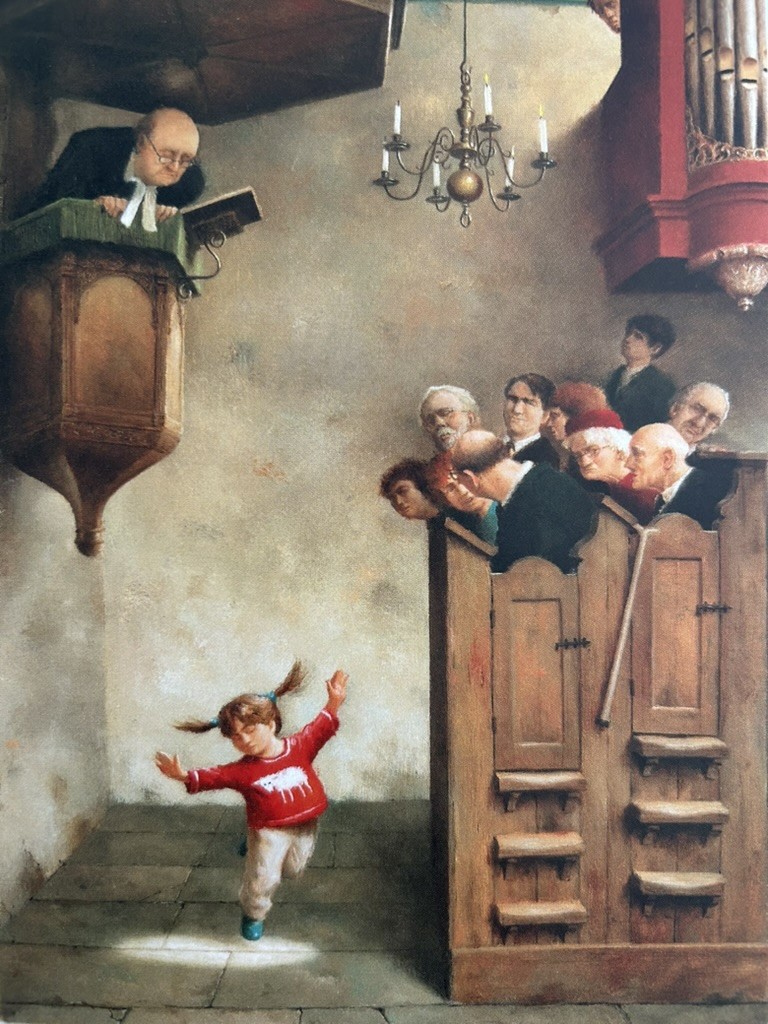
Dansje in de kerk, Marius van Dokkum
Children are full members of the Body of Christ today, bringing essential gifts, faith, and wisdom to our common life. As congregations seek deeper ways to welcome young people, we face a core question: How does our culture need to change so children can participate more fully in worship and the life of the Church?
That question anchored a recent workshop led by the Rev. Dr. Kenda Creasy Dean, an author, theologian, and practical ministry expert. The session was part of Pathways to Prayer and Practice, a five-year initiative supported by a major grant from the Lilly Endowment.
This grant gives the Diocese of Virginia a strong foundation to help congregations expand children’s participation in worship, deepen faith formation with families, and develop sustainable practices for congregational life.
For many parishes, change requires looking beyond more children’s programming. It asks us to examine our culture—the unspoken assumptions, habits, and expectations that dictate how children experience Sunday morning with the entire congregation, not just with their peers.
Experiments to Shift Parish Culture
Culture determines whether children feel they belong. A parish may declare that families are welcome, yet still expect children to remain quiet, still, and invisible during worship. Real inclusion starts by rethinking those expectations.
During the workshop, Dean used the story of Paul’s shipwreck in Acts 27 to frame this work. The ship broke apart, but the crew made it safely to shore on the remaining planks. For churches, old structures may no longer hold us the way they once did. That reality is a call to faithful innovation.
Parishes are invited to experiment with the ways they have always done things regarding children:
- Make room for shared worship and congregational life: Invite children into meaningful participation alongside people of all generations.
- Focus on relationships: Build authentic connections with families where they are, rather than waiting for them to walk through church doors.
- Start small: Gather a small team, test a simple idea for a season, and learn from the results.
The Cohort Experience
In the culture-change workshop, the inaugural Pathways cohort—representing 10 parishes across the diocese—wrestled with long services, rigid Sunday school expectations, and the assumption that faith formation must occur inside a church building. Participants asked for concrete examples, dedicated team conversation time, and clear guidance on alternative education models.
To illustrate non-traditional spaces, Dean shared about a church that set up a simple playground using cardboard boxes, pool noodles, and donated gear. This low-barrier effort created a safe space that sparked conversations and built community among local parents.
Dean emphasized a core theological point: innovation in the church is not about disruption, speed, or growth metrics—it is about love. Faithful innovation can mean trying a new idea, doing less, moving more slowly, or listening more carefully to children and families who do not yet feel at home in church life.
Sometimes that may mean trying something new. Sometimes it may mean doing less. Sometimes it may mean moving more slowly, becoming more vulnerable, or listening more carefully to children, parents, neighbors, and those who do not yet see the church as a place for them.
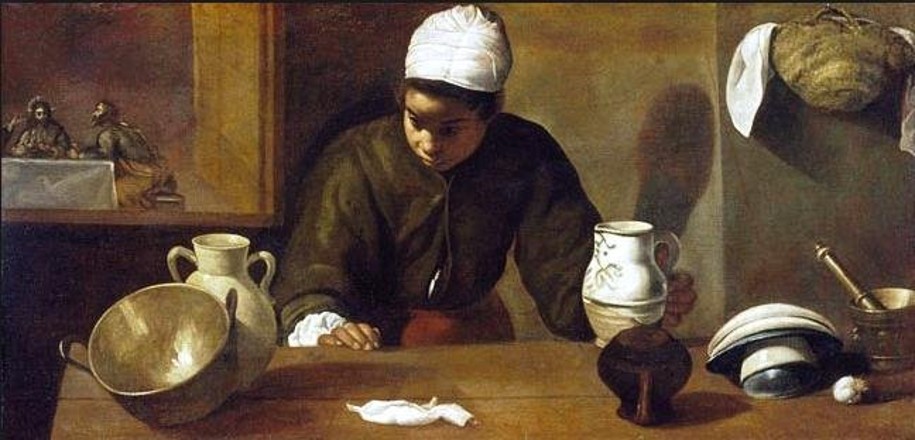
In the workshop, Diego Velázquez’s Kitchen Maid with the Supper at Emmaus (above) invited the cohort to wonder whether children, neighbors, and those outside our usual patterns may help the Church recognize where God is bringing new life.
This session marked the final workshop in the first Pathways cohort’s preparation phase before teams moved into hands-on experiment design at the Hatchathon retreat at Shrine Mont. Each participating church left the retreat with a plan for a ministry experiment to test during the implementation phase.
A Challenge for Every Parish
The Lilly grant provides resources for cohorts of churches, but the insights belong to the whole diocese. Transforming how children participate in worship is a work of renewal for the entire body of Christ.
Look at your own parish life this Sunday:
- What unwritten rules shape how children are received in your pews?
- Where are young people present, but not yet invited to participate?
- What familiar habits might your congregation need to release to make room for young faith?
When we adjust our habits to make space for children, their presence, questions, and energy help shape a vibrant present and future for our churches.
For more information, contact Pathways to Prayer and Practice Grant Director Tyler Henderson, thenderson@episcopalvirginia.org