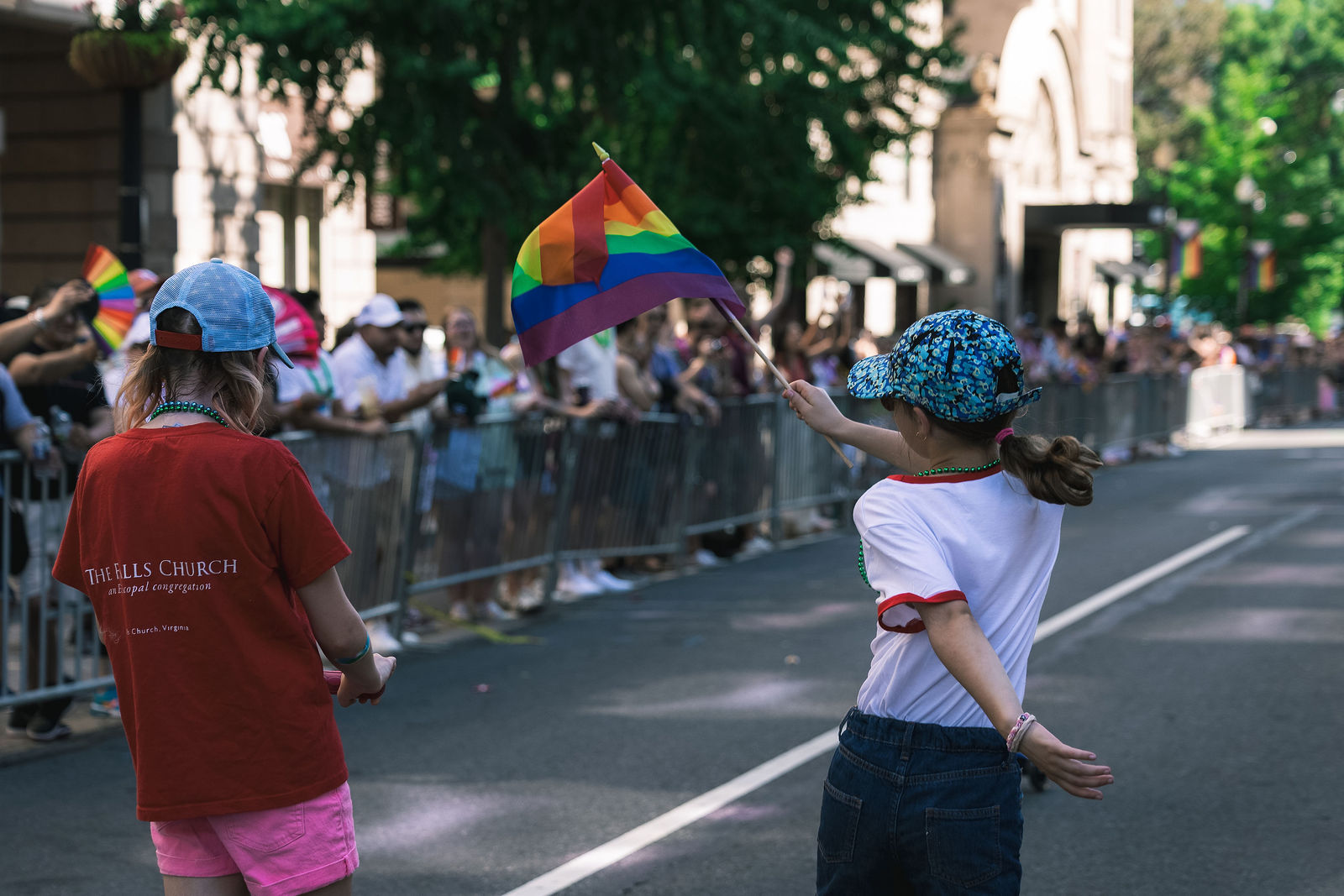
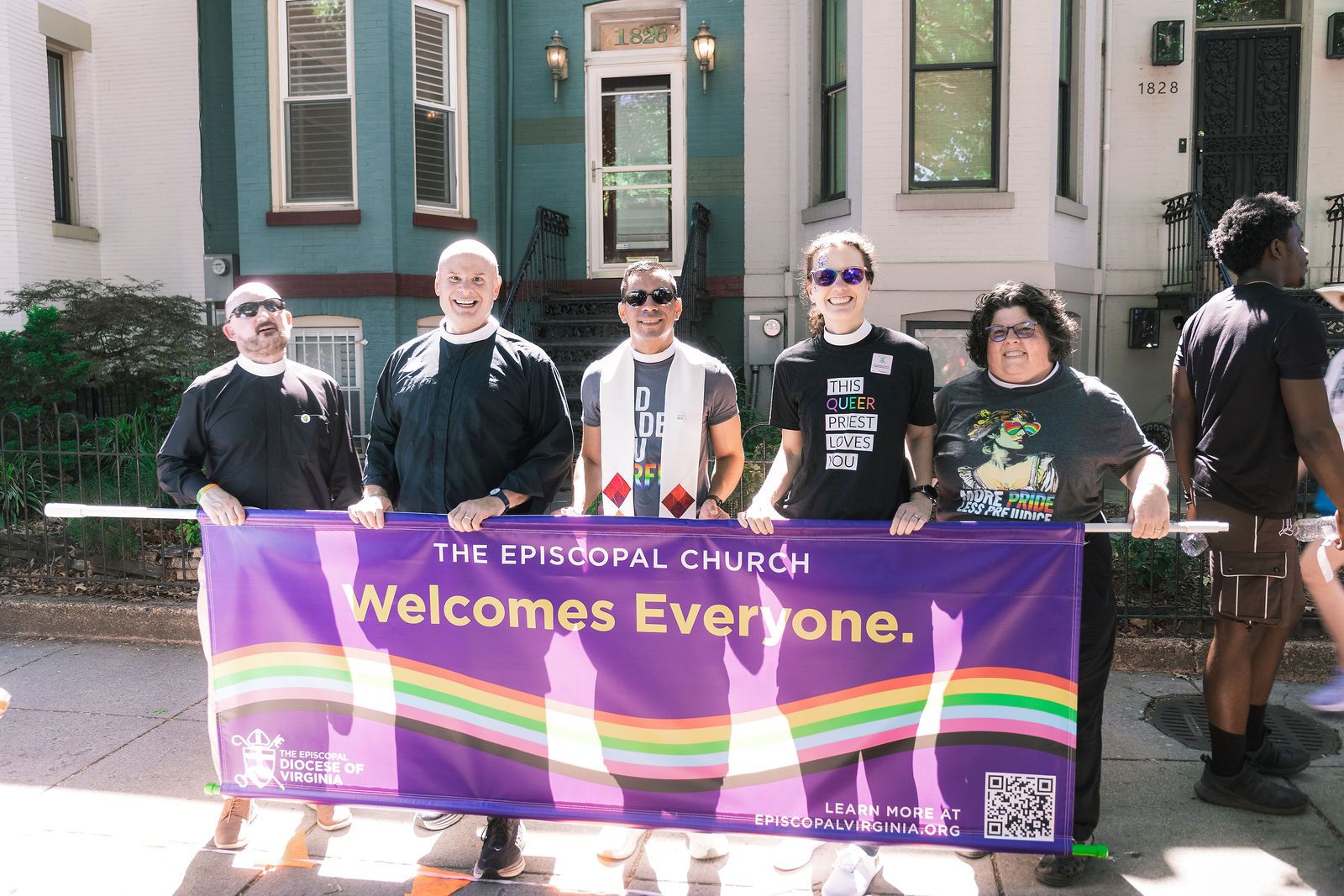
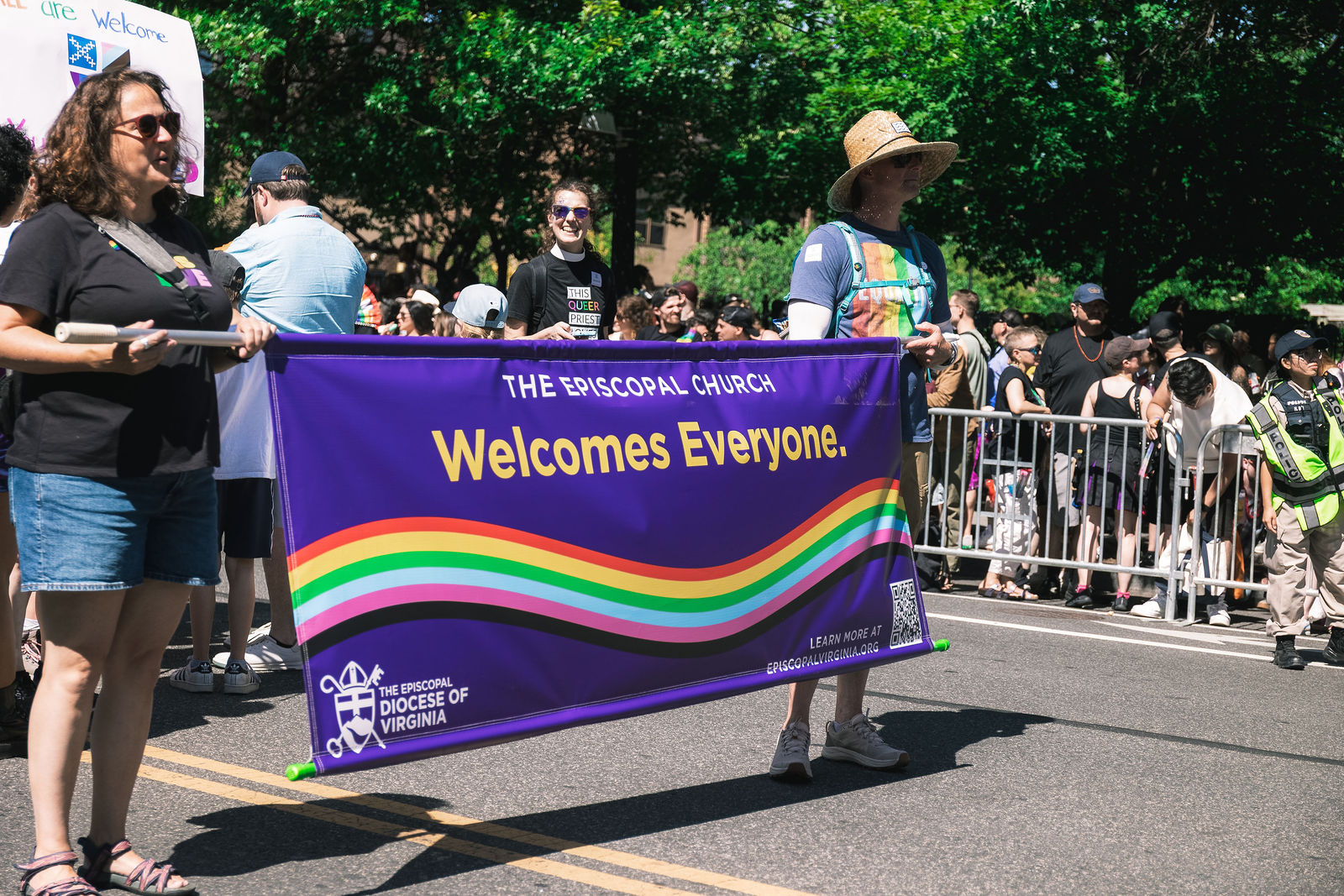
The Episcopal Diocese of Virginia marked a milestone toward inclusion and LGBTQ+ visibility at the 2026 Capital Pride Parade as diocesan clergy and parishioners marched behind an official purple Diocese of Virginia banner.
With the diocesan seal and message, “The Episcopal Church Welcomes Everyone,” the banner and its marching clergy and parishioners and friends signaled a changing church. In 2025, Virginia Episcopalians marched as guests behind the banner of the Diocese of Washington. Before that, they didn’t participate in an organized fashion.
On June 20, they moved in unity across diocesan lines, in a public celebration of the Diocese’s mission: “Love Jesus. Embody justice. Be disciples.”
“I think it’s important for real, for everybody to realize that God loves them and they’re all welcome,” said one Diocese of Virginia priest. “It’s important for me as someone who used to be in a church that wouldn’t accept all of me, and I am so happy to be Episcopalian, to be an Episcopal priest, and to share that all are welcome.”
Another participant marching for the third consecutive year with The Falls Church was thrilled to join the Diocese of Virginia this time.
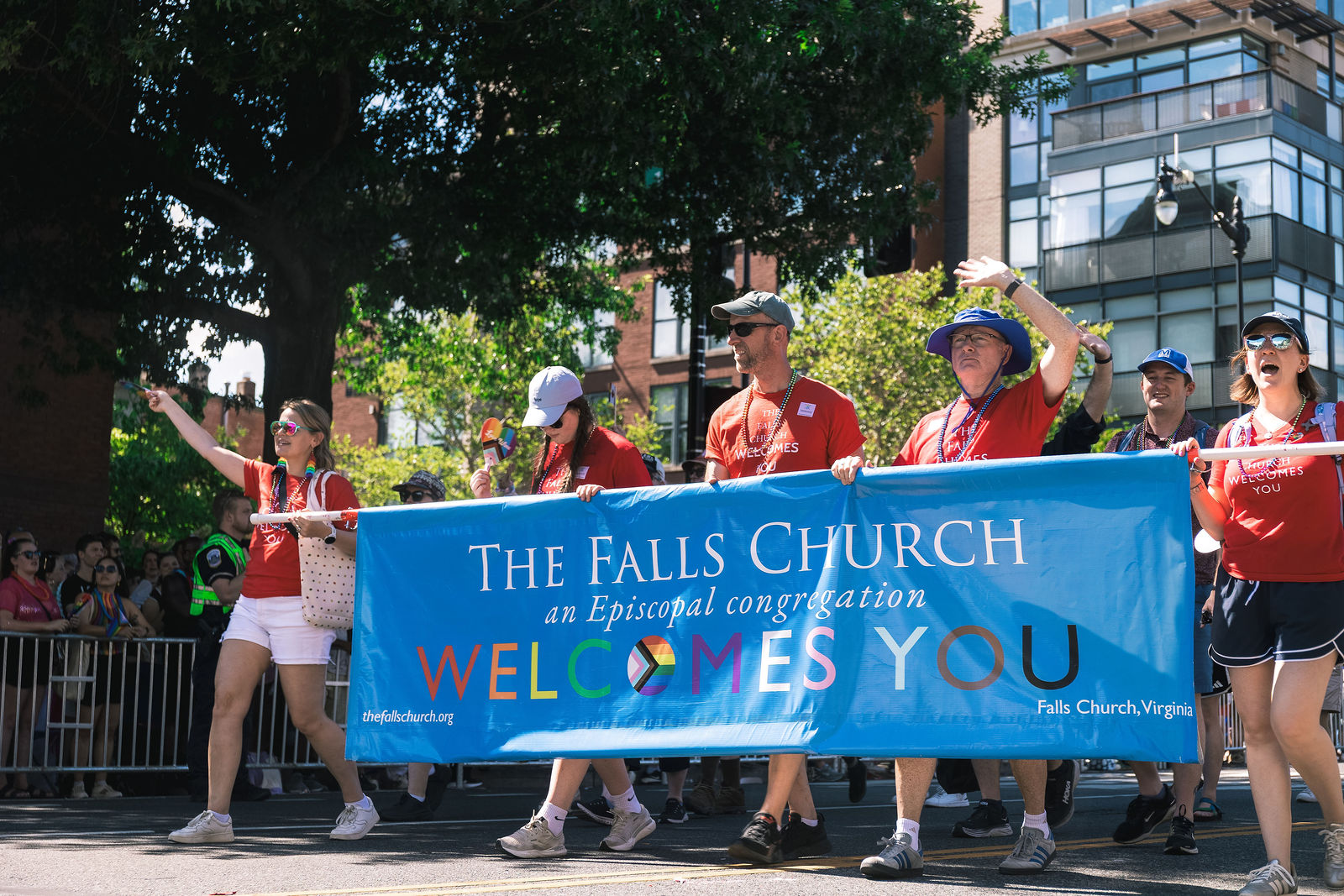
“It’s really important because our job is to witness to the love of Christ, and the love of Christ is boundless,” they said. “It’s limitless, and most especially, we’re called to bring that gospel to the folks on the edge. And for so many who have been pushed to the edge, we are sometimes the very first time that they see that Jesus actually loves them. We’re here as agents of and witnesses to grace and glory and love and mercy, and it’s essential that we are here to spread the love that is Jesus.”
A Historic Collaboration
The morning began with an unprecedented joint gathering at St. Luke’s Episcopal Church, a historically Black congregation in Washington, D.C. There, the Diocese of Virginia and the Diocese of Washington—two neighboring jurisdictions separated by the Potomac River and distinct administrations—prepared for the march.
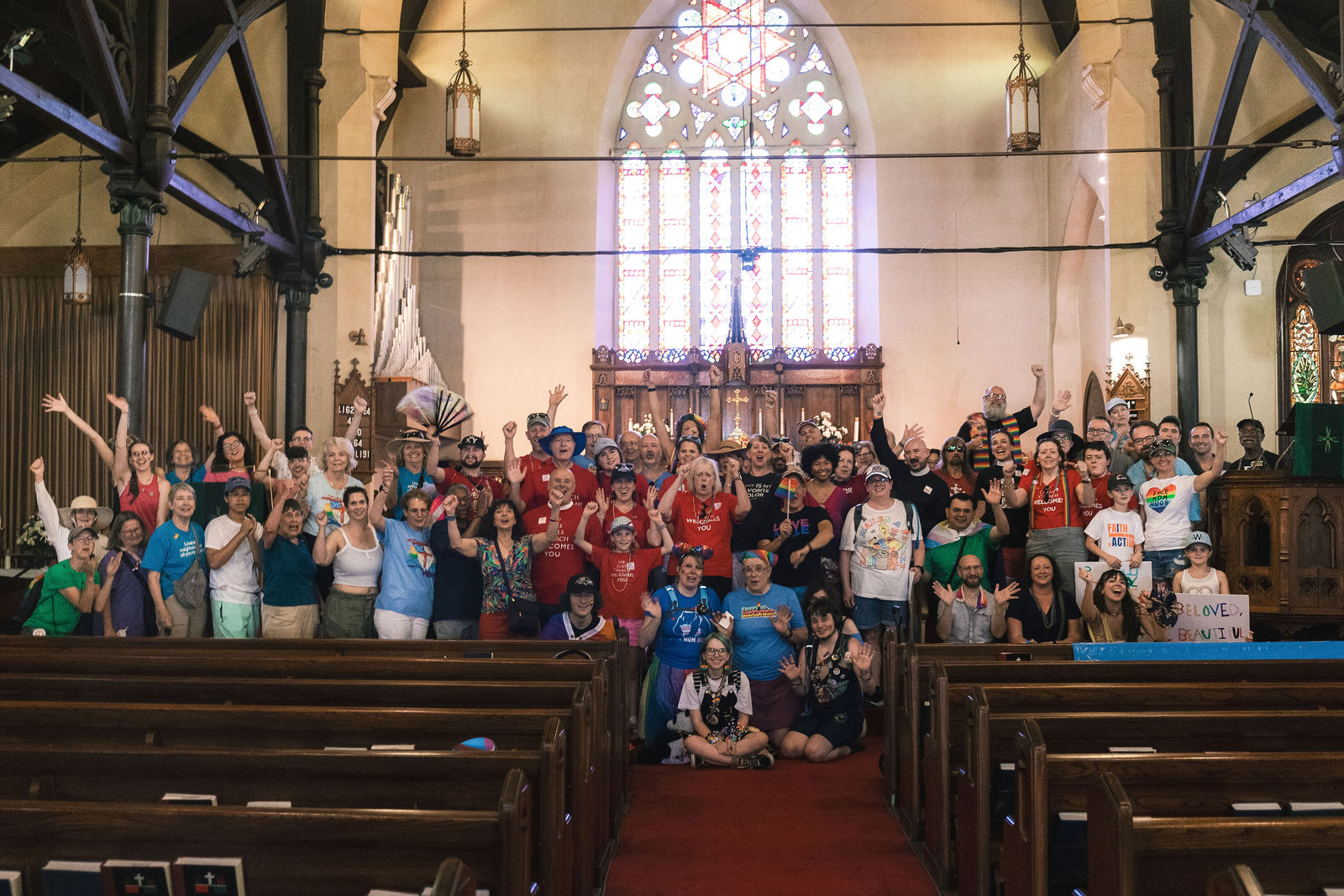
“To have these two dioceses that have nothing to do with one another administratively, literally across the body of water, acting and gathering together at Saint Luke’s — it was really awesome,” said the Very Rev. Burl Salmon, Dean of the South Fairfax Region and Rector of The Falls Church.
One neighbor of St. Luke’s explained their motivation for marching as a straight person: “Pride means to take responsibility for who you are, and present yourself well, and enjoy life. It means God is doing his work. I’m a believer, and he is the strength that I find in me. Not that I am not gay, but I believe that everybody should have the right to be what they are.”
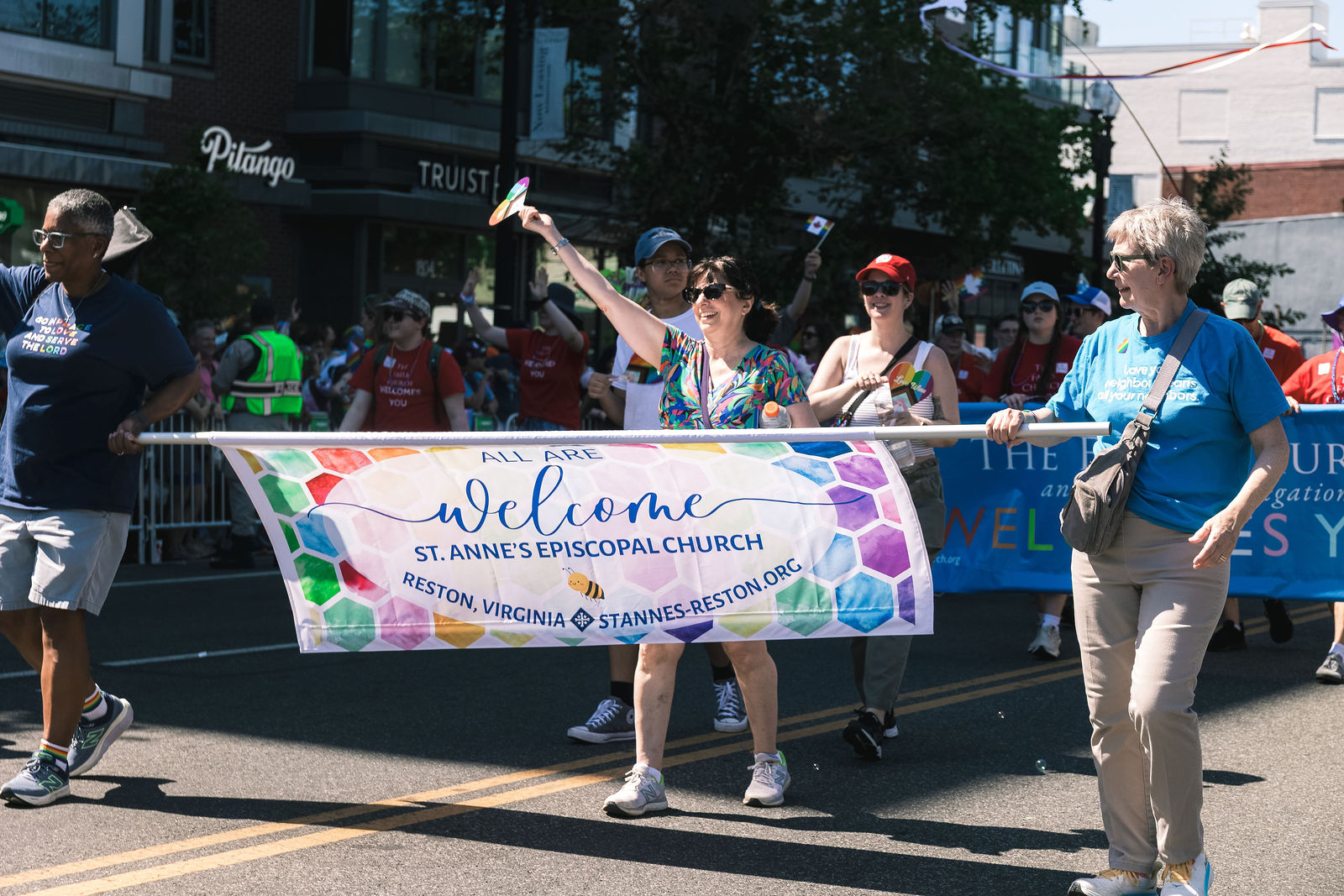
Parishioners from dozens of Virginia churches mingled with D.C. Episcopalians, sharing shirts, signs, and a collective spirit of witness before hitting the parade route. The Falls Church and St. Anne’s Reston marched behind their own welcoming banners.
Many women geared up to give “free mom hugs” to paraders and parade watchers, many of whom had become estranged from their own parents after coming out.
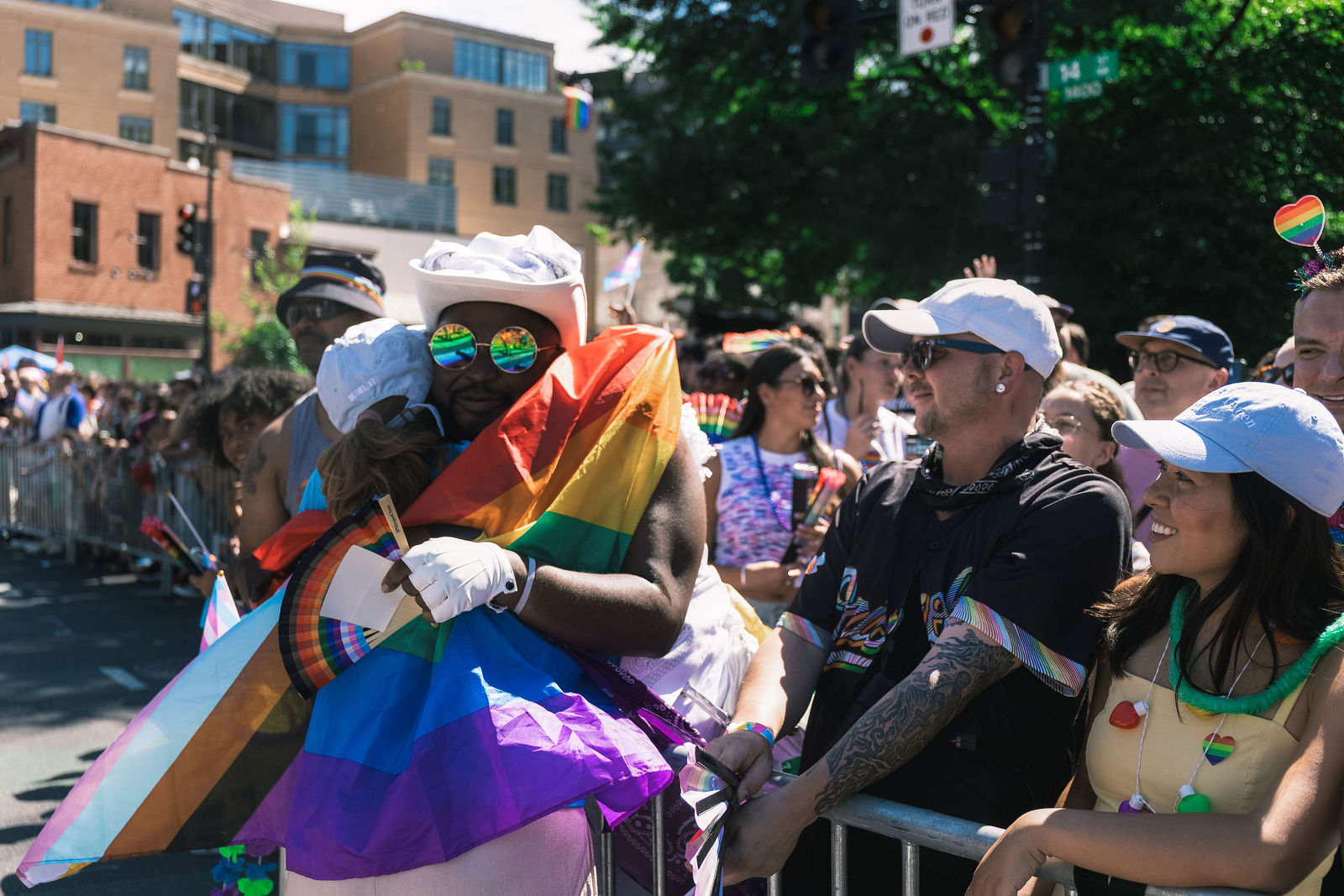
“We’re here to spread the love of God and make sure that everybody who’s queer knows that they’re also loved by God,” an Episcopalian participant said. “All throughout the year, we’re taught to be ashamed of ourselves. We’re taught that we’re not actually children of God, but here we can be proud of who we are and exactly how God made us, I think that to look into the face of somebody who loves you is to look into the face of God, and this [event] is just here to affirm that.”
Transformed Witness of the Ally
While the diocesan sponsorship marked an administrative milestone, the pulse of Pride was felt on the pavement.
“I’m here today to celebrate basically joy,” said one marcher who had participated since the early 1990s. “Creation is good, and people of different sexual orientations are all part of creation. This is a joyous event, basically, to celebrate God’s creation… It also is important to remember that all your fellow citizens in our country are part of God’s creation.”
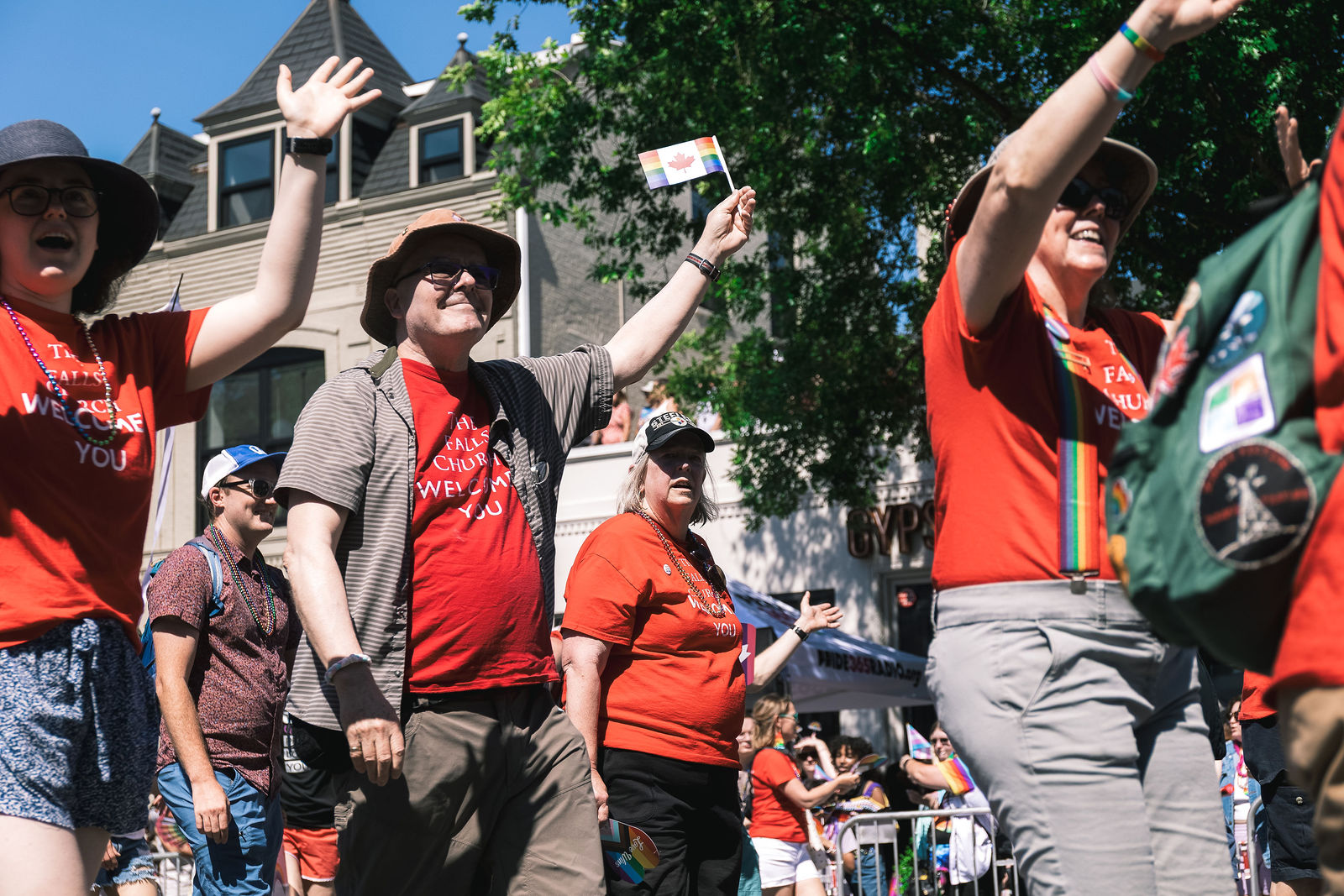
For Salmon, the most moving aspect of the parade isn’t just the visibility of queer clergy, but the internal shift that happens within the church’s straight allies who choose to march.
“I’ve always argued that the power of the Pride parade is in other places, but it’s especially for the folk who march in the parade—our allies,” Salmon said. “They’re transformed by watching people’s reactions to them, because they’re in the parade attesting to the fact that God loves you, and seeing the response makes them realize: Wow, God’s love is absolutely transforming.”
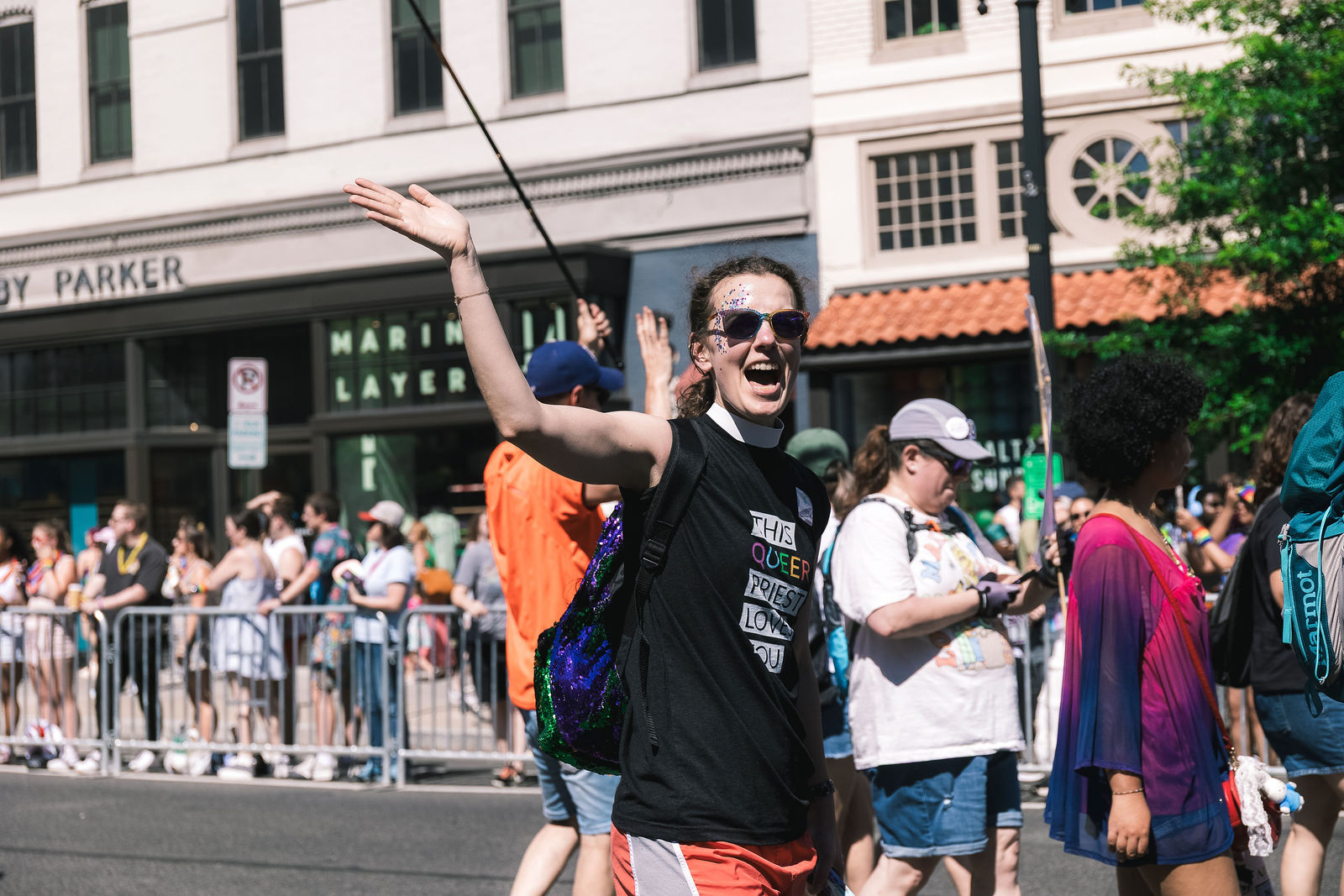
For first-time marchers, witnessing the emotional hunger for love and acceptance from the thousands lining the streets is unforgettable. Mutual grace sparks when someone who has been marginalized sees a clerical collar, and realizes they are being blessed rather than condemned.
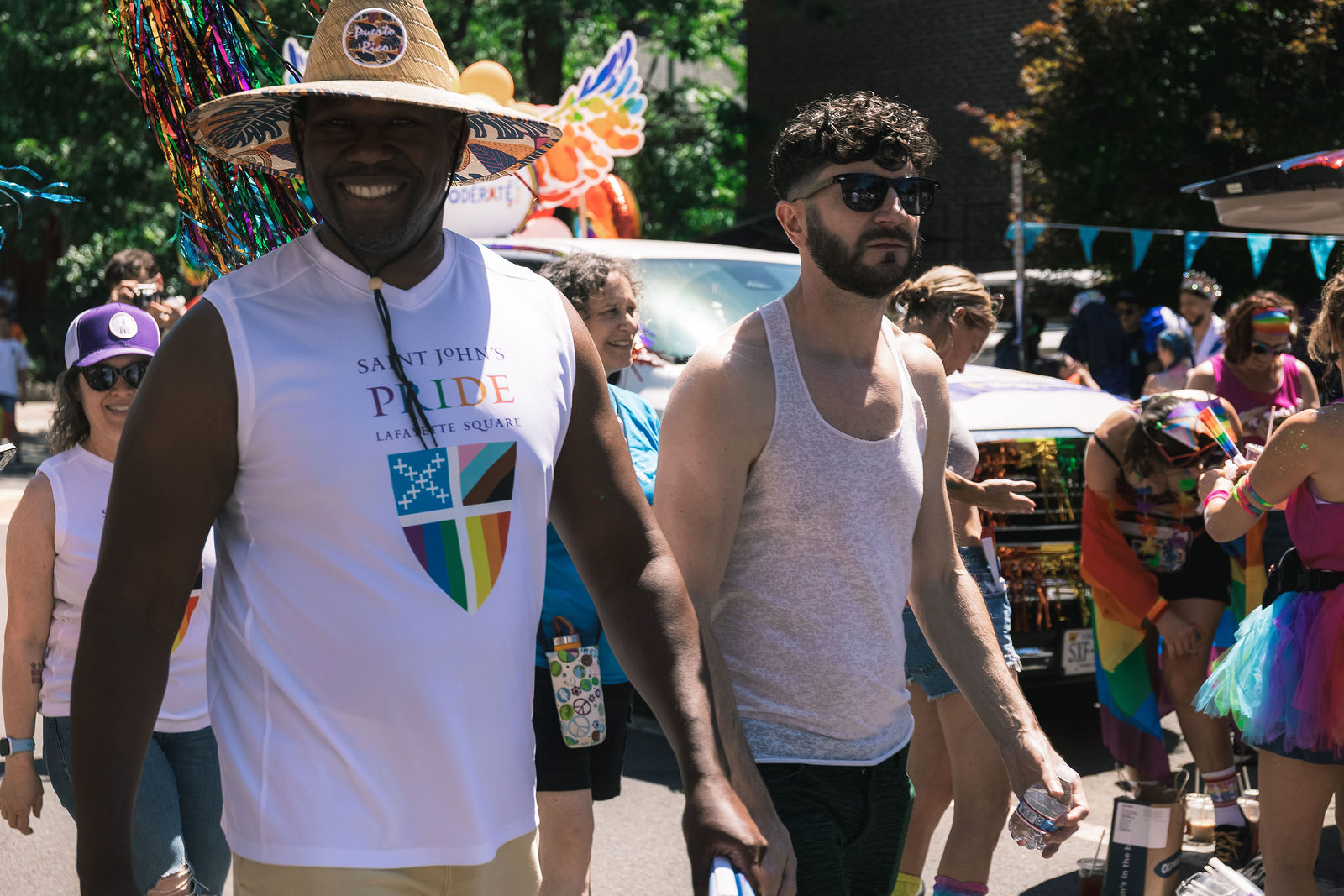
One participant joined from St. John’s Episcopal in Georgetown for the second year in a row.
“As a spectator, like you see all the fun, and then as a group participant, you’re like part of the fun,” they said. “And then seeing people’s faces like get lit up when they see you walking … seeing the people in the crowd react is really fun. Pride means not feeling ashamed and being like, it’s OK to to be yourself, and hopefully we spread that to other people, because I I don’t feel ashamed anymore, but I want other people not to feel ashamed either.”
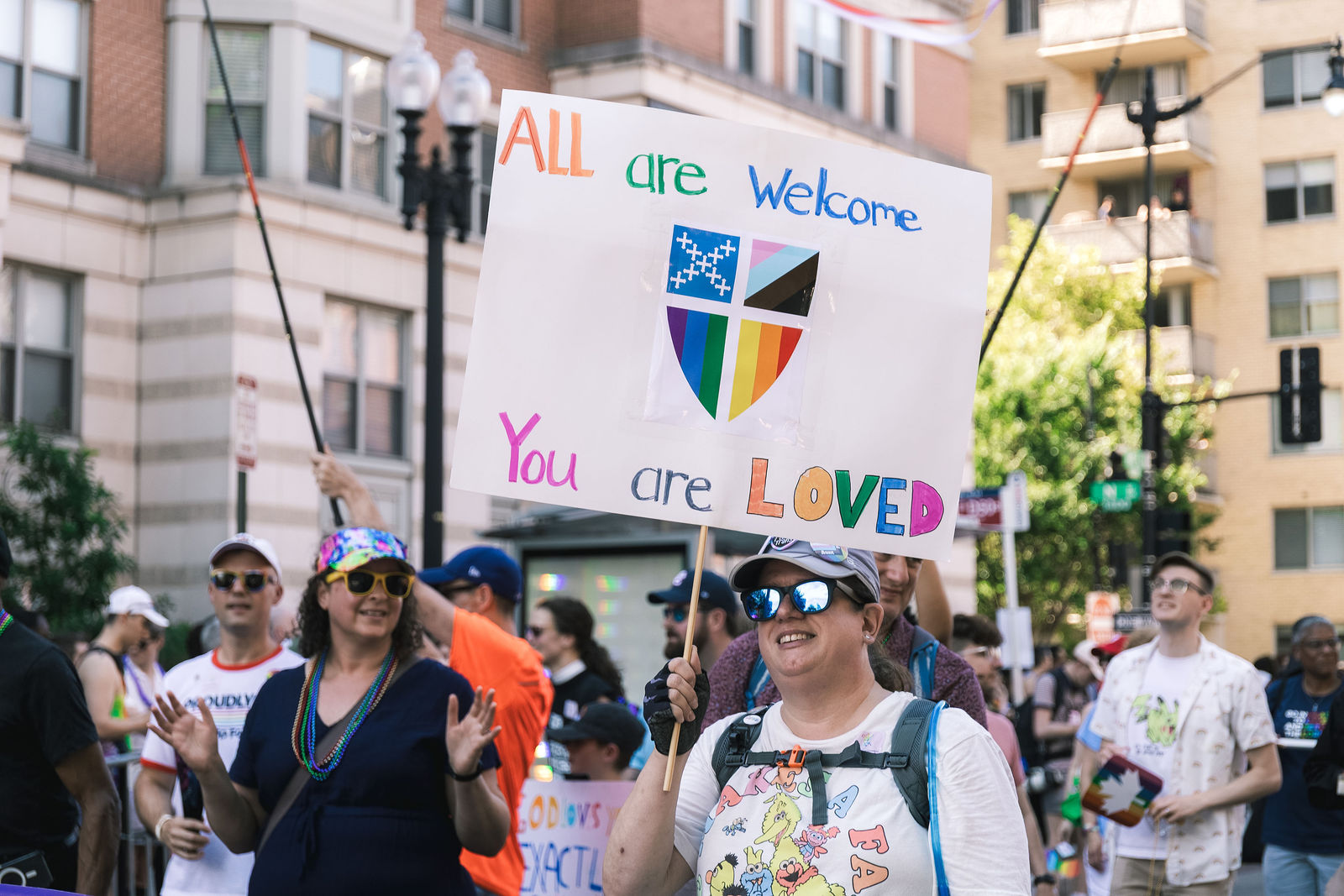
An Arc of Movement and Honest Conversation
The official diocesan banner and explicit backing represent a major first step for the large, historically complex Diocese of Virginia.
“We can’t overstate the importance of the diocese desiring to sponsor a contingent,” noted Salmon, who has been part of the diocese for six years. “While we have begun to reckon with our legacy with racial injustice, we have not always done the work of reckoning with the injustices done by the church and on behalf of Christ to the queer community. This is a significant step.”
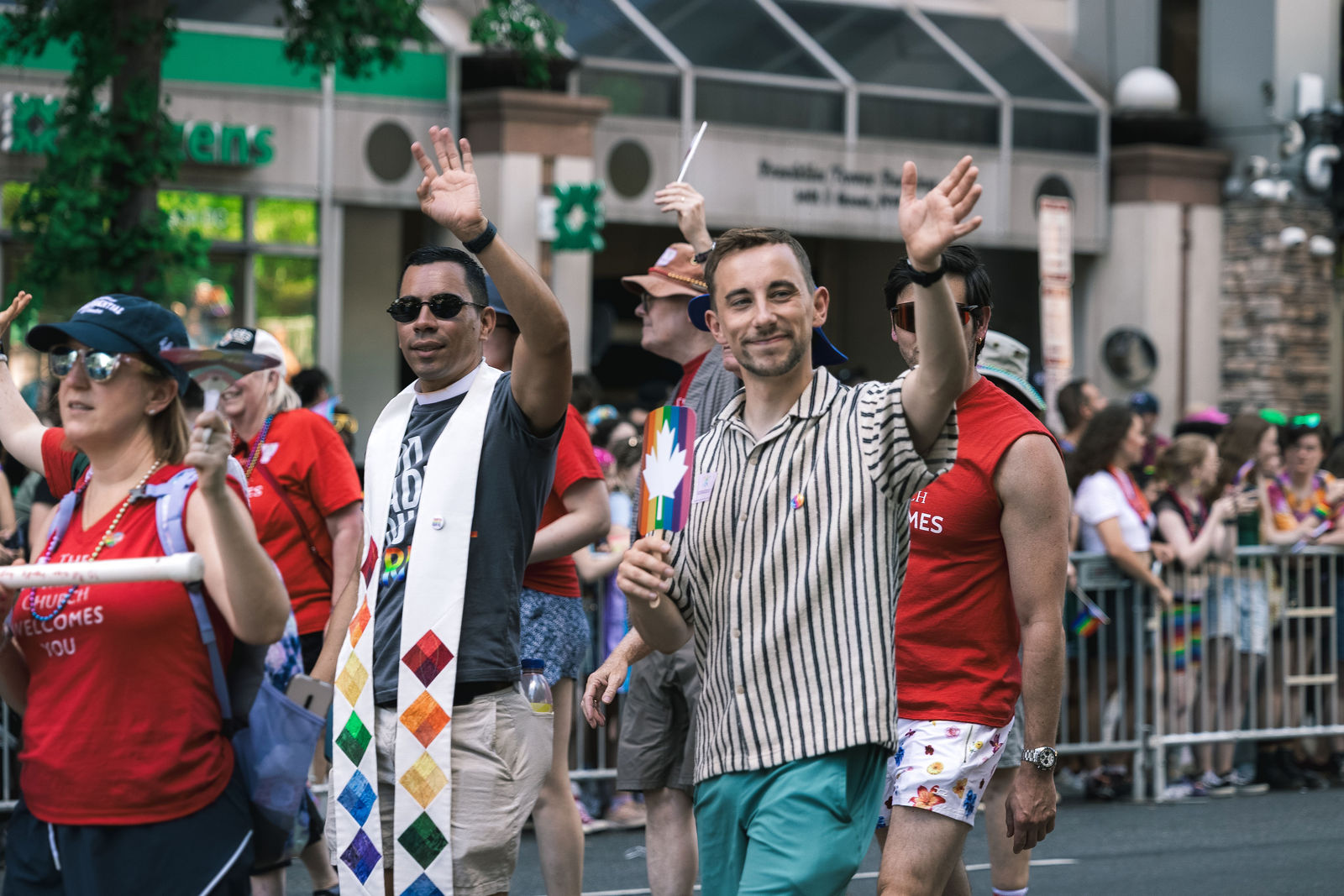
That step grew out of a resurgent, organized queer voice within the diocese. Following years of fragmented connection and a lingering feeling of being unsafe, a dedicated group of queer clergy officially gathered at a larger scale, invited into intentional, honest conversation with Bishop E. Mark Stevenson.
This visibility is vital, Salmon argues, because it combats complacency within progressive faith spaces—a sentiment expressed by comments such as, “you got marriage, what else do you want?” A rainbow flag on a church plaque doesn’t mean the daily work of understanding queer life and culture is finished.
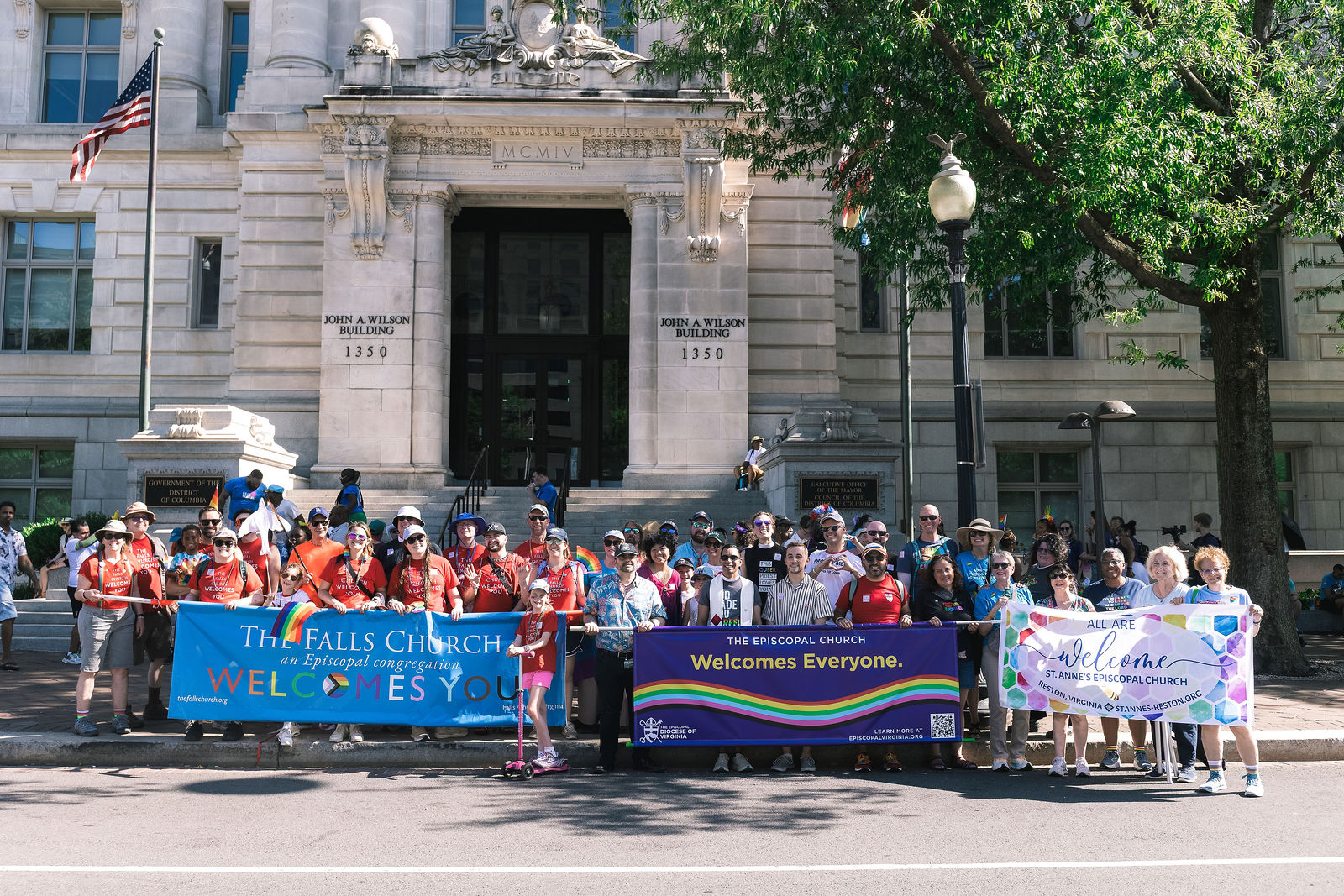
“There is still a gap shadowed by the flags and the reputation of the church,” Salmon said. “Being here and being a faithful Episcopalian is still coming out of a legacy that’s caused significant damage.”
Suspending The Darkness
As The Episcopal Church celebrates its 50th anniversary of affirming that LGBTQ+ people have a full and equal claim to the Church’s pastoral care, the 2026 march served as a celebration and sanctuary.
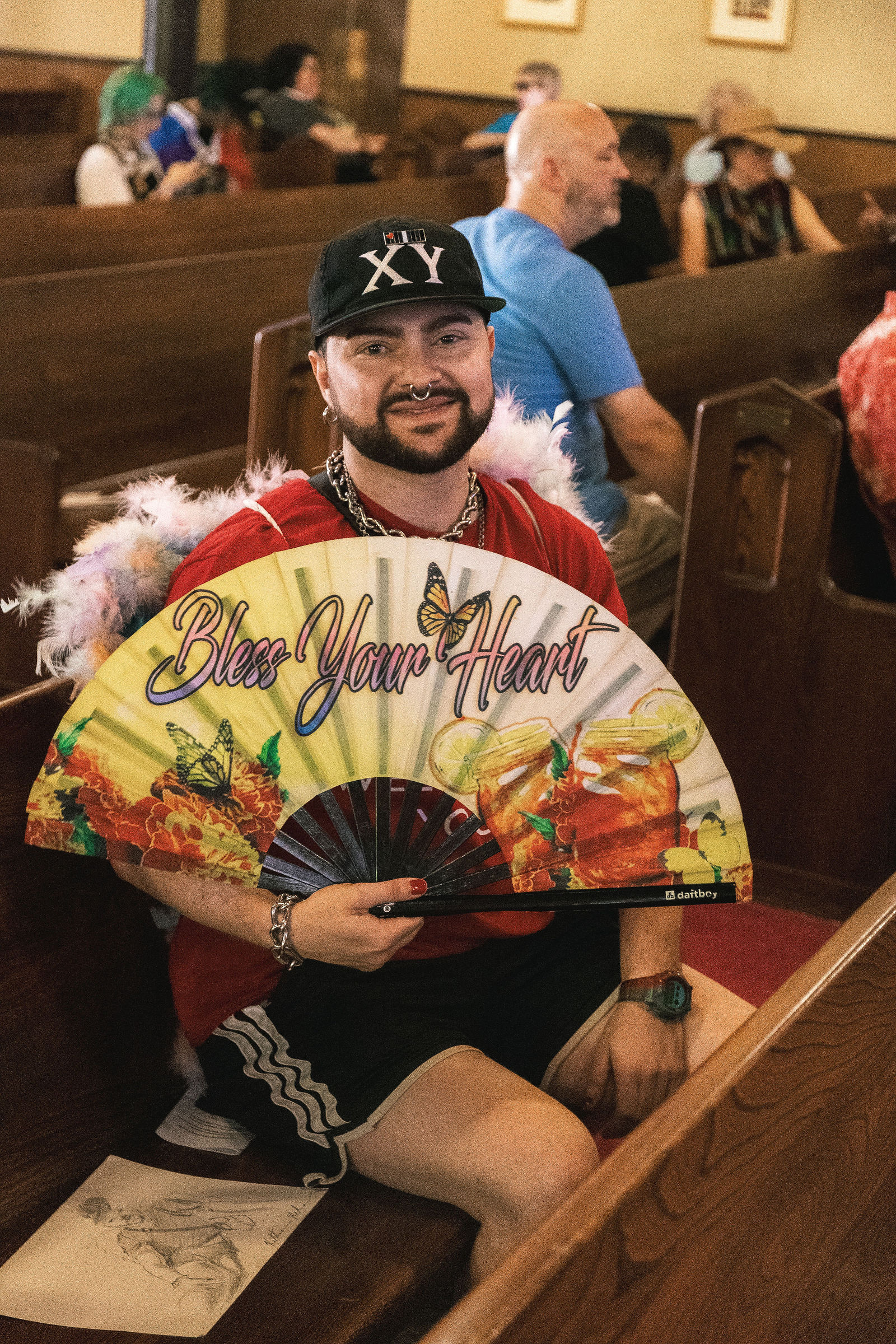
“It’s important because God made all of us, and he made us diverse,” said one Episcopalian participant. “If he had just wanted one flower, he would have made roses, but he didn’t; he made dandelions, he made irises, he made asters. And today is a reflection of all of God’s diversity and his grandness and his ability to bring people together, which is what we should be. This is an event that represents what the world could be like and what Jesus wanted us to be. This is what he was looking for when he shared his thoughts from God, and so I think this is a celebration of that part of creation.”
Amid a broader societal climate that can feel heavy and hostile for LGBTQ+ individuals—particularly trans siblings—the parade route provided a literal space to breathe.
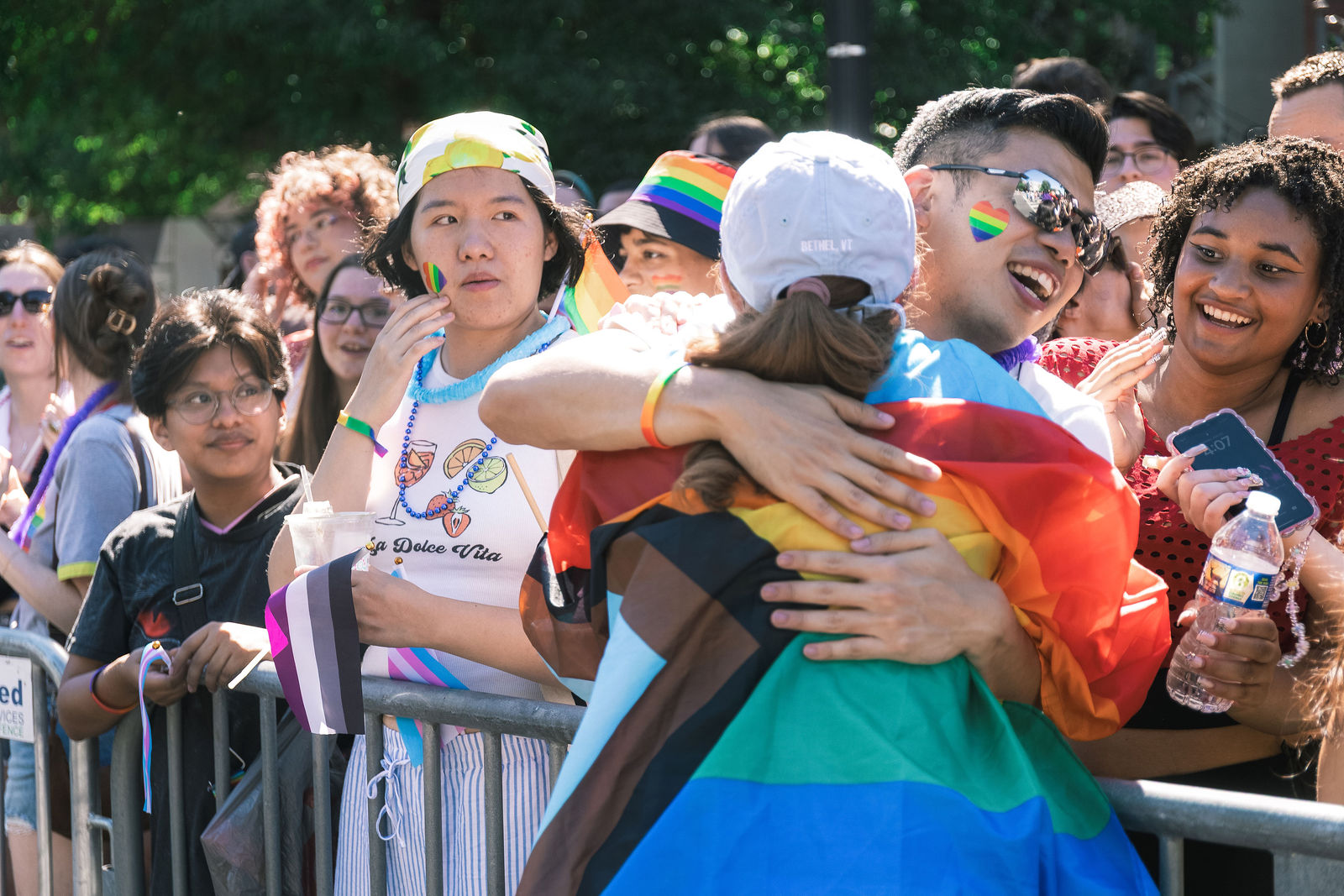
“For me, Pride suspends the darkness. Love is the light,” Salmon said. “For that Saturday, we exhale in joy and in light.”
Under a new banner, in a historic collaboration across the Potomac, and with an open dialogue at the diocesan level, the Diocese of Virginia is intentionally saying to queer clergy and parishioners: We see you, we recognize you, and we are walking with you.
“Pride means for me that I could be myself, and I could be my true self, and be loved and cherished,” another Episcopalian participant said. “It’s a loving feeling, you know, like knowing that each of us have value, and I think that just makes the world much more special. I hope we keep growing as a society and as human beings. That every child will know that they are, if they just be themselves, they will be very special no matter what.”