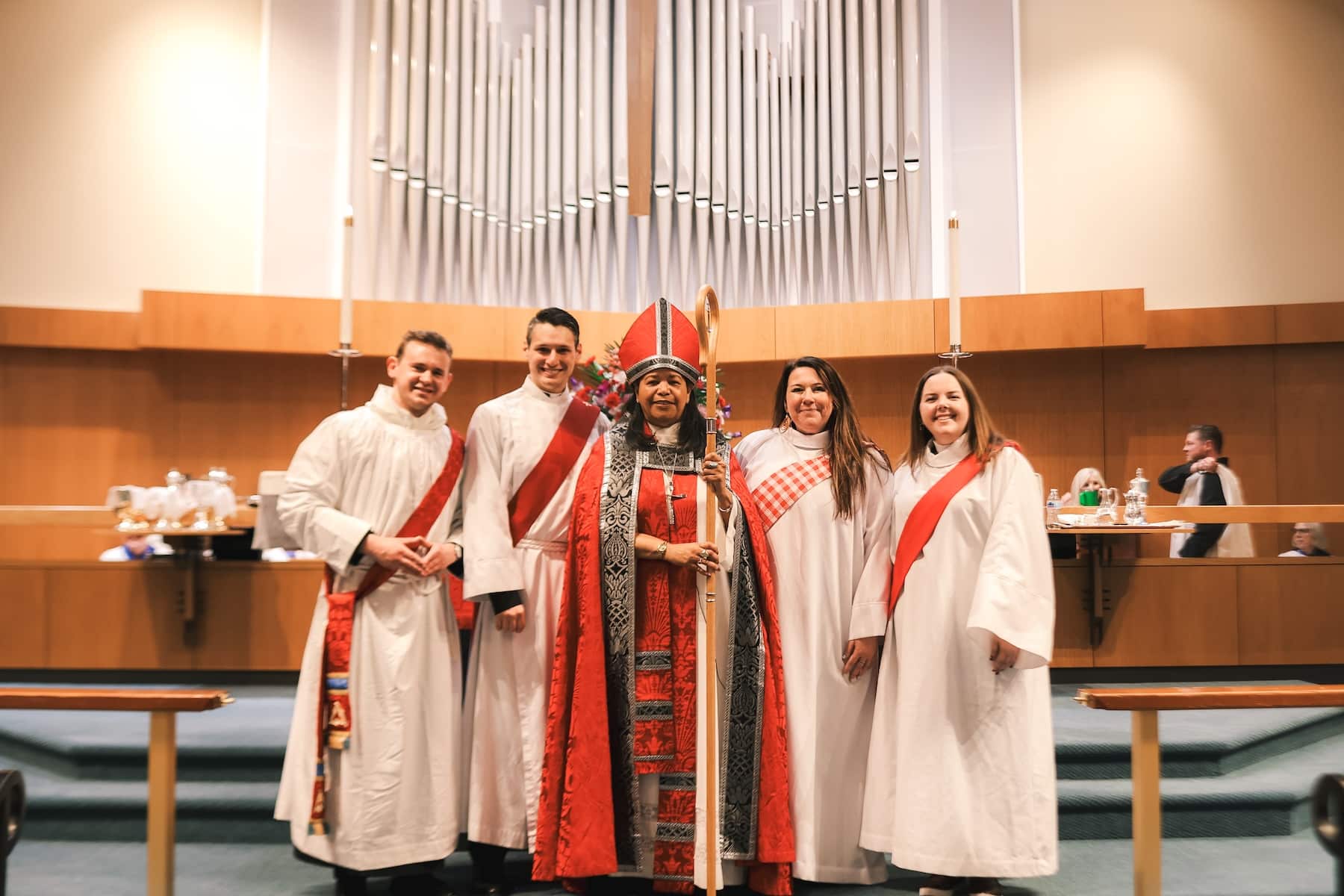
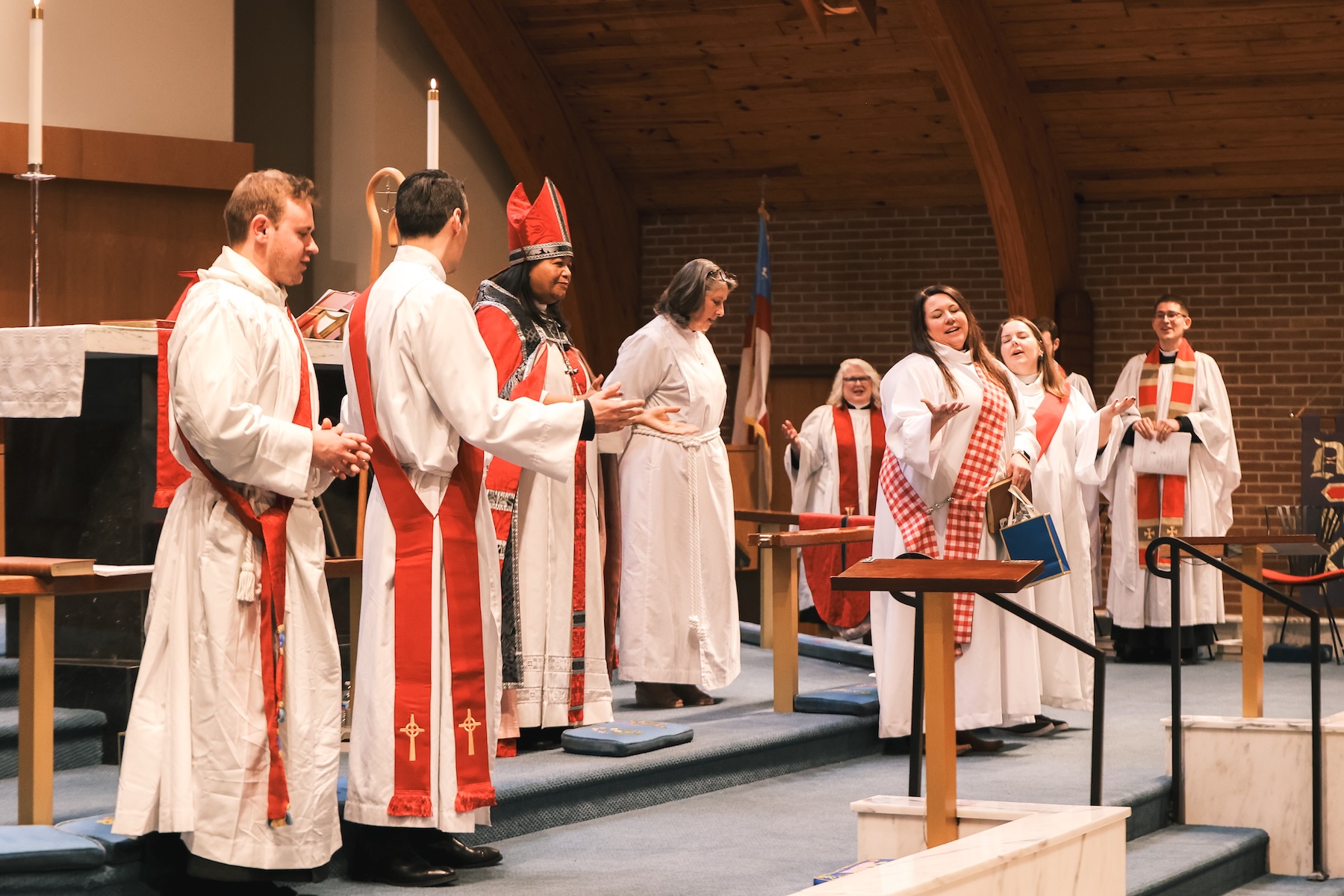
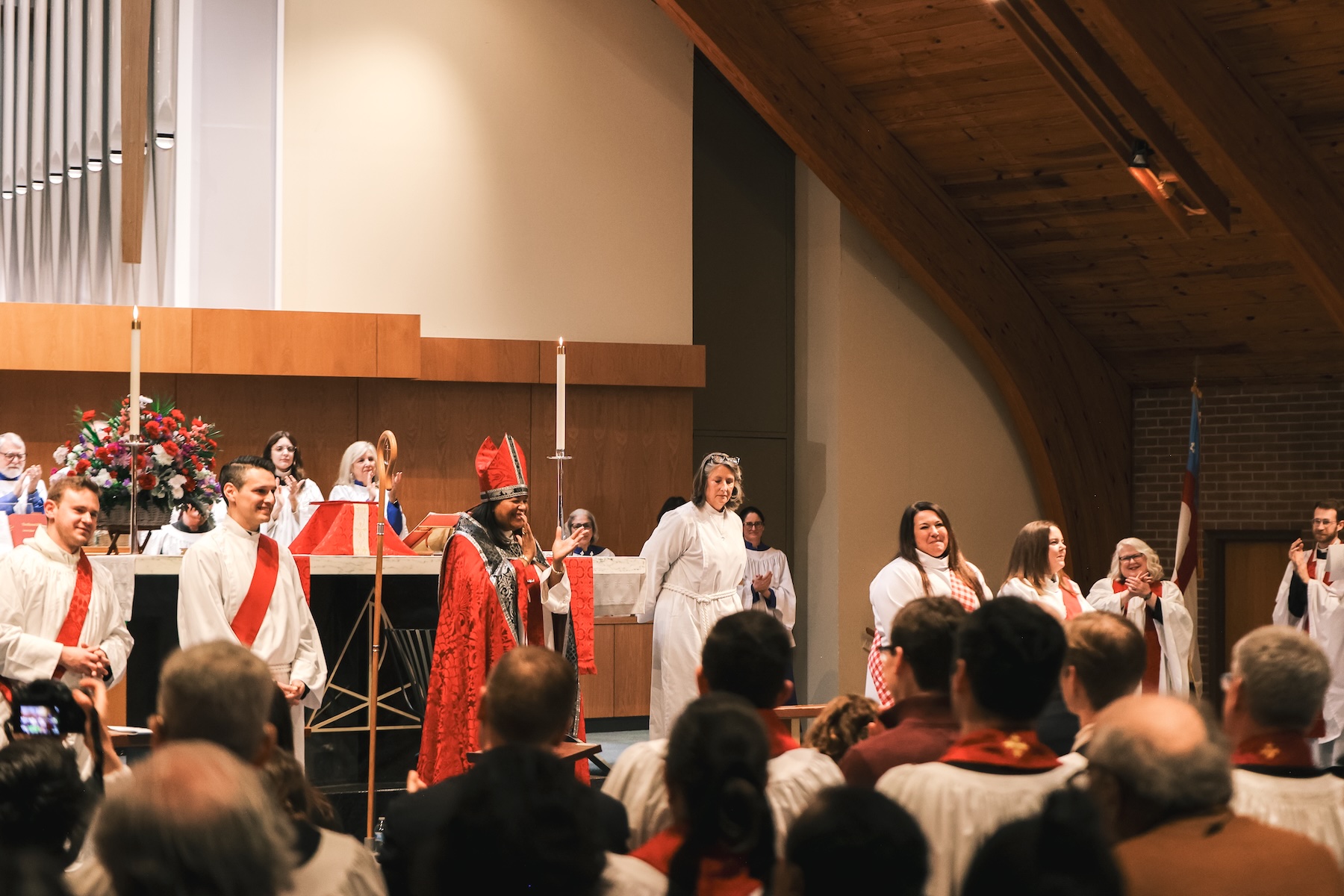
With faith and trust in God’s guidance, four people took the next step in their calling and became transitional deacons — an important step toward priesthood in The Episcopal Diocese of Virginia — on March 7 at St. Dunstan’s Episcopal Church in McLean.
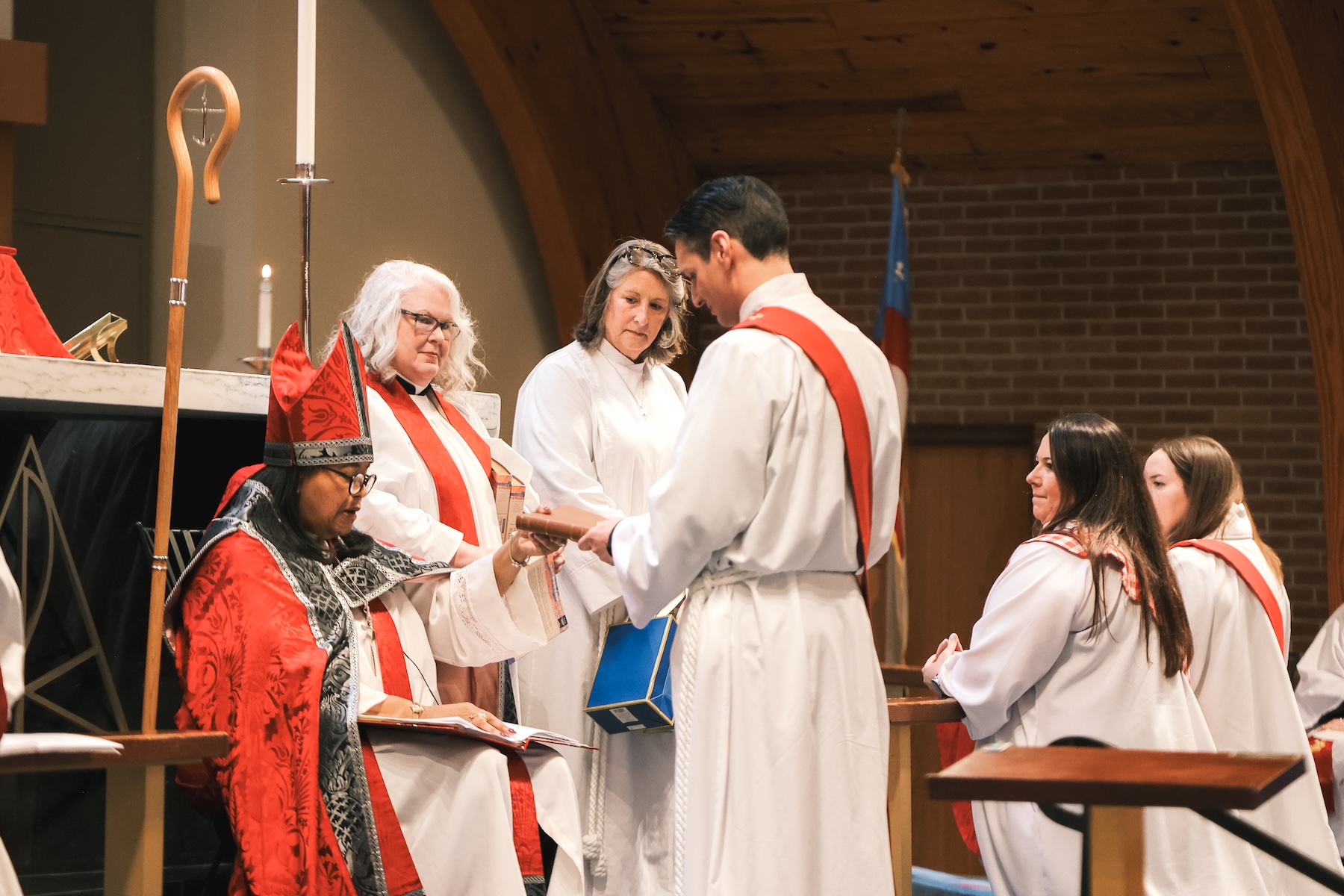
The Rt. Rev’d Gayle Elizabeth Harris, Assistant Bishop of Virginia, ordained John Hager, Joshua House, Emily Rutledge, and Paige Trivett to the Sacred Order of Deacons. They answer to the bishop, ministering to all God’s people, particularly the poor, weak, sick, and lonely.
Harris called new deacons to a ministry rooted in peacemaking and compassionate service, especially toward the weak, afflicted, and marginalized. She emphasized God’s universal love, justice grounded in reconciliation and mercy, and faithful living that resists evil with humility, courage, and grace.
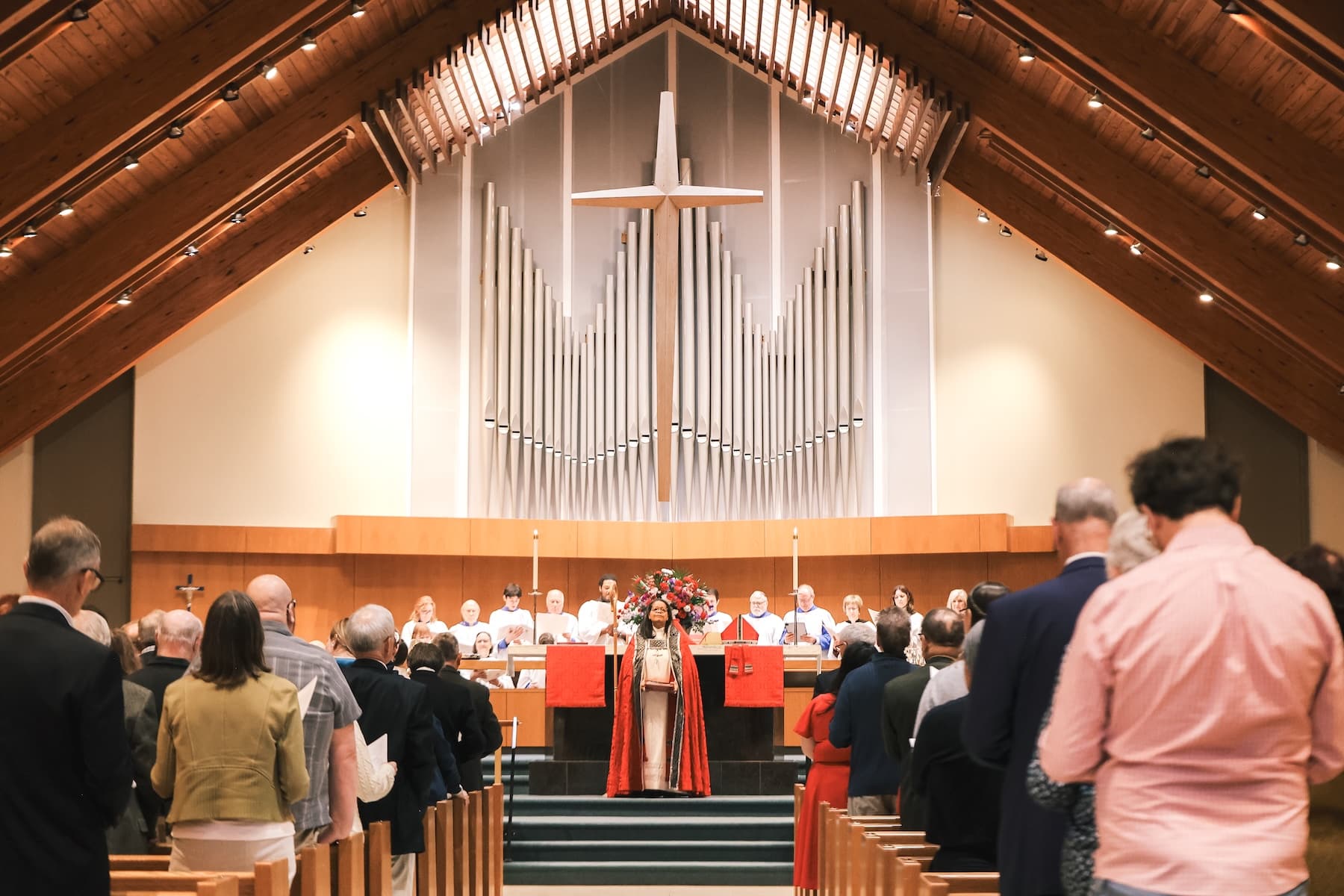
“Go forth to be those who make peace and not just pray for it,” Harris said. “Be of good courage and strengthen the weak. Lift up the lowly and help those who are afflicted in any way,”
“Know that all humans are children of God and therefore they do not need documentation for you to share God’s love,” she added.
“Strive to be urgent for justice which is not about reward and punishment but in God’s eyes, it is reconciliation, restoration, and mercy … Always hold fast to the truth, the whole truth that comes without spin or an agenda, and may make you uncomfortable.”
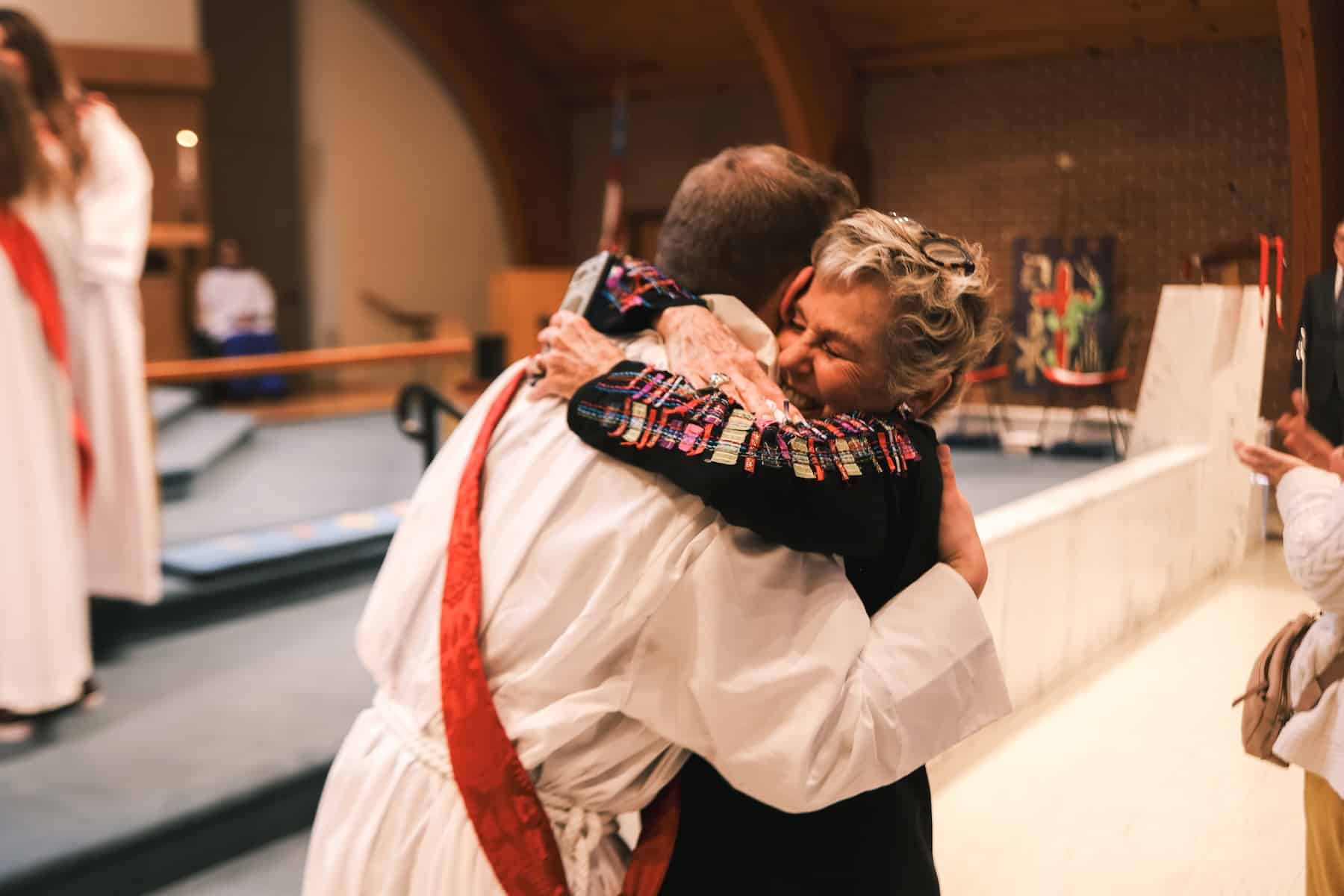
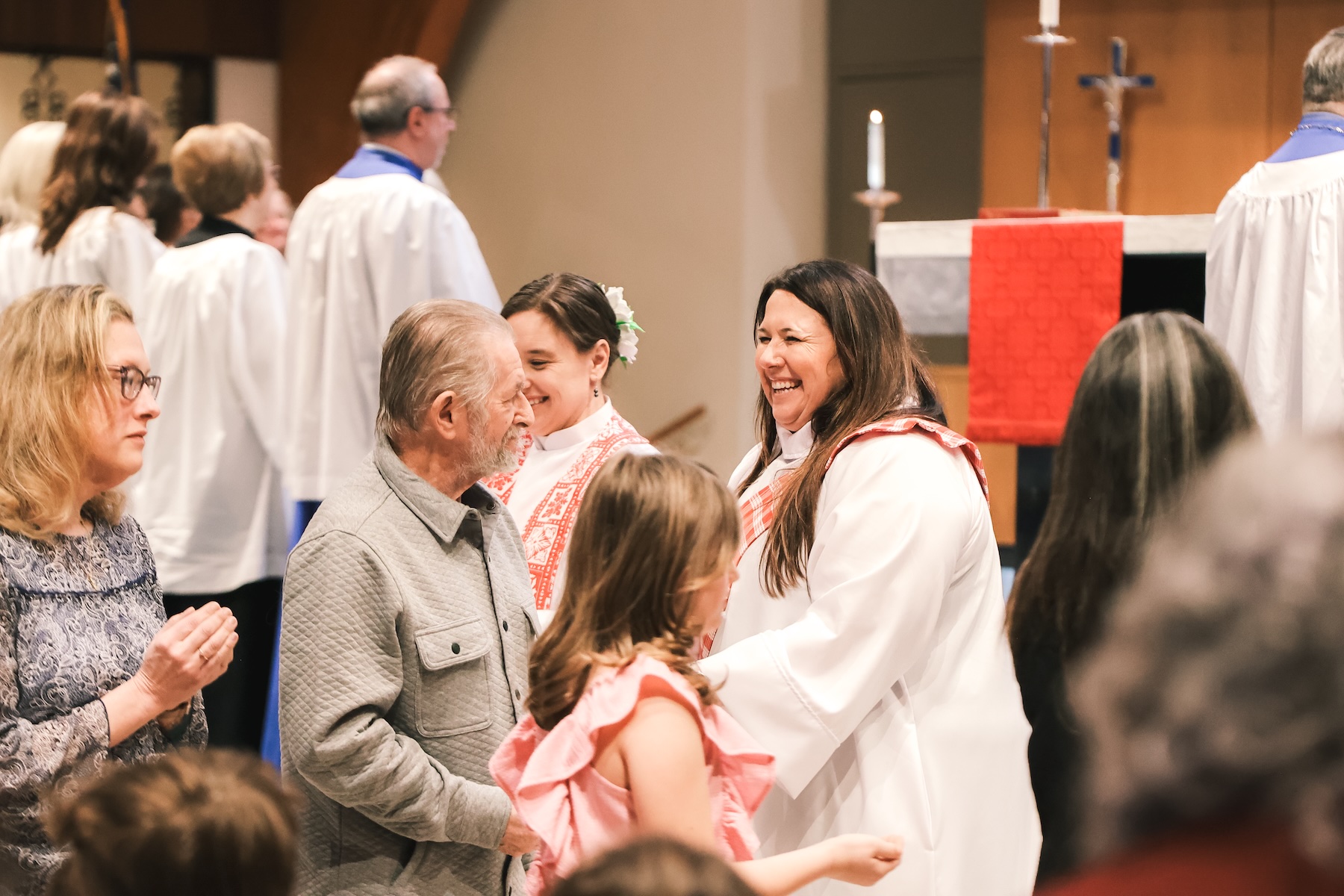
Family, friends, mentors, and other supporters filled the church for the ordination and for photos with the four. Music was performed by the choir of multiple churches under the direction of St. Dunstan’s Music Director Derrick Grant.
The Rev. Dr. Sarah Kye Price, Vocations Minister for the diocese, said she loved that the four come from such a wide range of seminary backgrounds.
“John is at Berkeley Divinity School at Yale; Josh is at Virginia Theological Seminary; Emily is in the first graduating cohort from General Theological Seminary’s Hybrid MDiv program, and Paige is at Seminary of the Southwest,” she noted.
They are all graduating in May and June from their respective programs and are on track to be ordained to the Priesthood in September, Kye Price added.
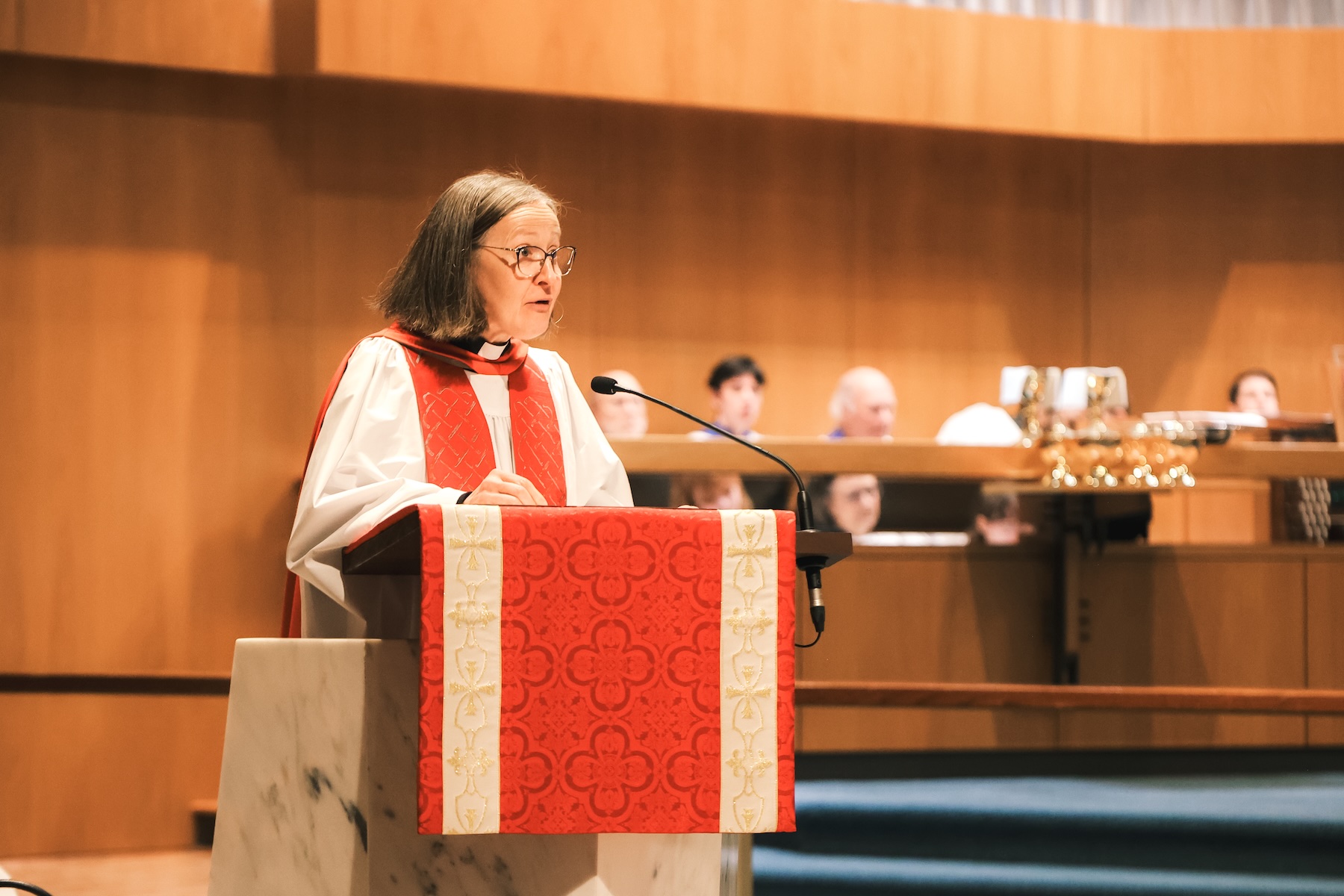
The Rev. Dr. Theresa Morgan, McDonald Agape Professor of New Testament and Early Christianity at Yale Divinity School, told the transitional deacons that their ordination is a call to live as witnesses to God—embodying Christ’s love, bringing the world’s needs to the church, and helping others trust in God’s presence in every moment of life.
She pushed against the idea that the church is entering a new age in which clergy should prepare for martyrdom:
“I think the souls of the Reverend Dr. [Martin Luther] King [Jr.] and others might remind us that, indeed, martyrdom is not new in the present day. But that does mean that this is a very important moment to talk about martyrdom and to talk about what it means, and especially to talk about what it is and what it is not for Christians now. Because, perhaps surprisingly at this point in time, the word martyr does not mean somebody who dies for their faith. The word martyr means witness.”
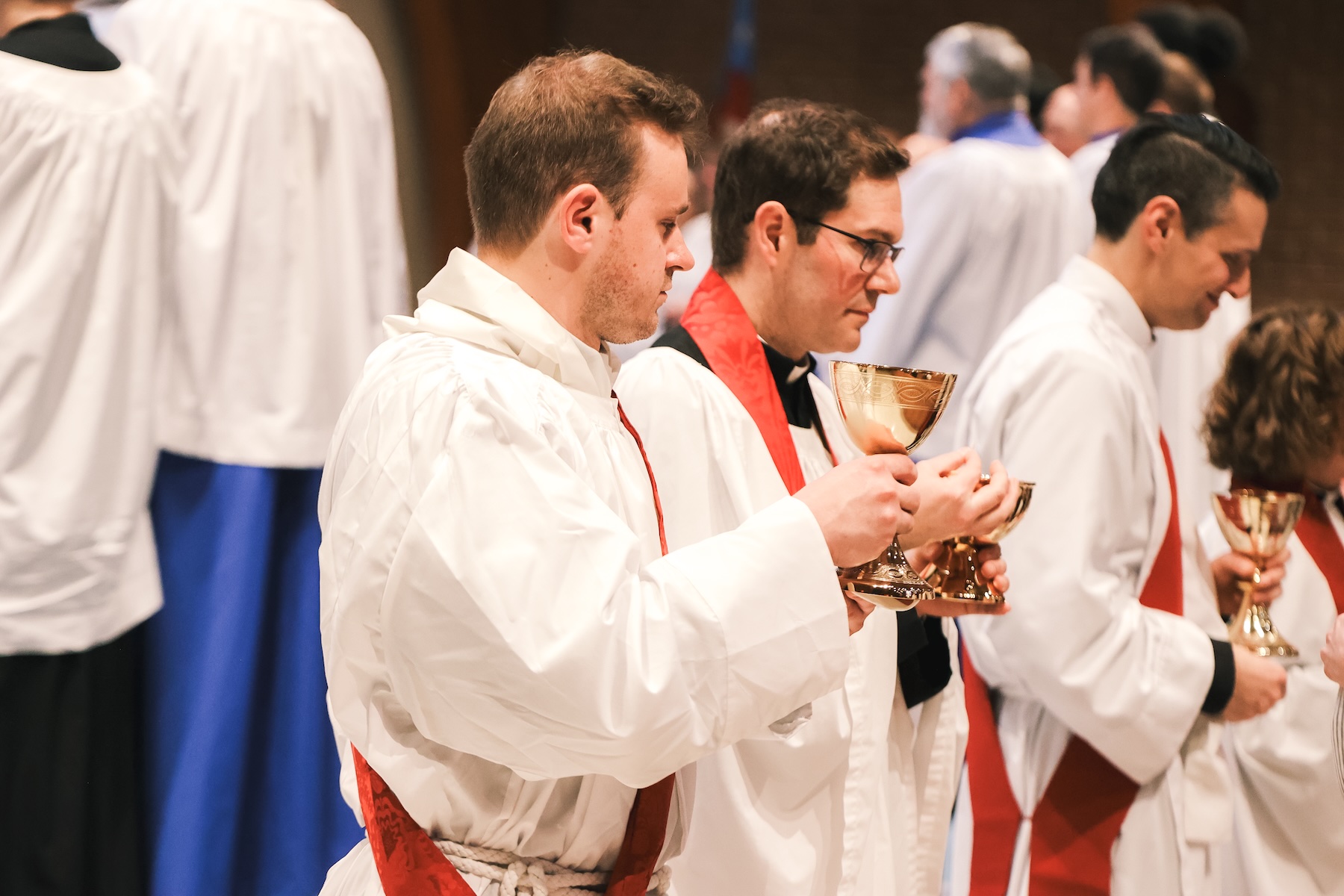
Prior to the ordination, the new transitional deacons were asked to summarize the story of their calling for the Diocese of Virginia readers. They were also asked about balancing clergy work, the significance of ordination, their hope for the future, and any further details they wanted to share. Here are their replies.
John Hager: “Blurring of heavenly and earthly realms”
I was raised as a Roman Catholic but during high school in Virginia began to find my home in The Episcopal Church at St George’s in Fredericksburg. During my university years in Edinburgh, Scotland, I became active in the Scottish Episcopal Church and formally began discernment for the priesthood.
After returning to the States, I continued the discernment process with the support of St George’s and spent a year working with the Episcopal Service Corps at St James School in Philadelphia. Thereafter, I began my seminary studies at Yale Divinity School. I am especially grateful to the Rev. Joseph Hensley and the people of St. George’s for their support, and for the unwavering guidance and advice of the Rev. Will Dickinson, the Very Rev. William Ogburn with the Diocese of Long Island, and the Rev. Dr. Kyle Babin of the Episcopal Diocese of Pennsylvania.
Hopes as you go forward as a deacon:
For centuries, deacons have been associated with the ministry of angels in celestial worship. Angels, indeed, frequently wear the deacon’s dalmatic in Christian art. While I cannot claim any angelic state of being, I approach my diaconal vows as a calling to inhabit worship as a way of life that points us towards the blurring of the heavenly and earthly realms. I share my drawing of an angel vested as a deacon, after Allan Rohan Crite.
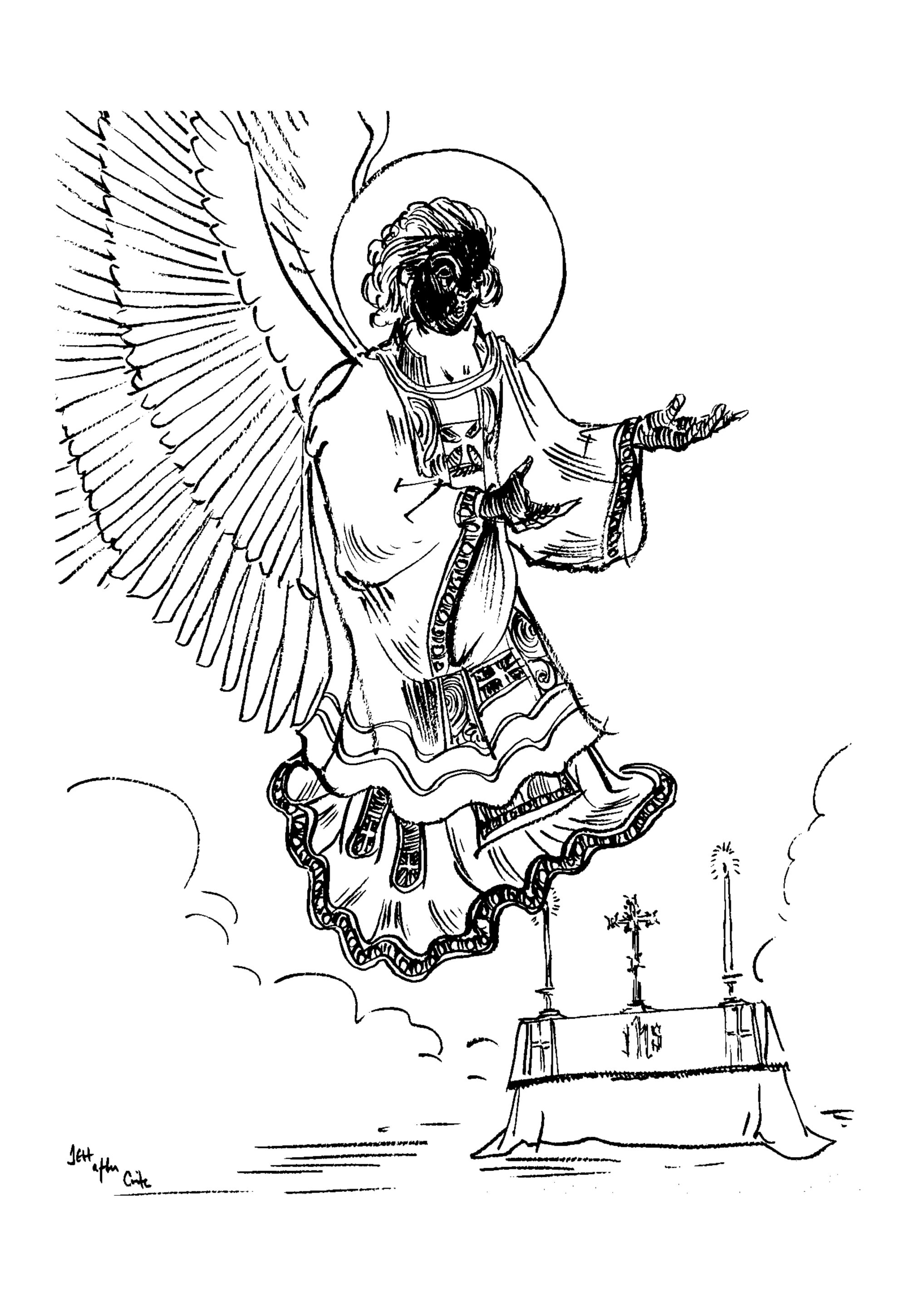
One thing I hope for is that God’s ministers—newly or long ordained alike, with God’s people in the Diocese of Virginia—inhabit with great confidence the witness of beauty, restoration, and dignity of the Church’s sacramental Life.
Although changes and challenges confront us, I hope that we will continue to resist narratives of church death and instead bear witness to the continued life that is professed day after day at the font and the altar.
I currently reside in New Haven but I will return to the Diocese of Virginia after my graduation.
Joshua House: “Stay aware of what doors open and what doors close”
Discerning my call began in 2020. A friend and I had been discussing his career plans when he asked what my own were. I said I wasn’t sure, but that I didn’t plan on being a litigator for the rest of my career. I’d been an attorney since 2012. I asked what he thought I’d end up doing, and he said, “Something to do with religion.” We hadn’t talked about religion much, so his comment both caught me off-guard and reminded me of times in my youth when I’d considered seminary and a ministry career.
After my wife gave her blessing, I broached the subject with my priest, the Rev. Shearon Williams of Saint George’s, Arlington. We began meeting, almost monthly, to discuss and discern my call. I wouldn’t be ordained were it not for her guidance throughout my discernment. And after nearly two years of those meetings, I began the formal discernment process and was granted postulancy in 2023. That summer I started seminary at Virginia Theological Seminary.
Balancing diaconate work with another career:
Throughout most of seminary I continued working, part-time, as a constitutional civil-rights lawyer. But looking ahead, I feel called right now to focus full-time on ordained ministry. To that end, I’ve accepted a call as Assistant Rector at Saint Matthew’s in Sterling.
Advice for readers who may be feeling called:
My suggestion is to just keep moving forward, slowly, and to stay aware of what doors open and what doors close. My experience working part-time during seminary was an important clue that, at least for now, I do not feel called to continue in legal practice. Don’t be afraid to push yourself and try things out. But also be attuned to when things aren’t working and need to change.
Emily Rutledge: “Every single one of us is called to something”
I was born and raised in Kailua, Hawaii, worshipping at St. Christopher’s, a little beach church with a big heart. The Diocese of Hawaii empowered and educated me and I was called to youth ministry at Church of Our Saviour (COOS) in Charlottesville in 2009. I have heard the call to ordained ministry since high school but the realities of life (children, caring for a parent with dementia, and divorce) made residential seminary inaccessible.
The Diocese of Virginia supported my discernment even when it was unclear how ordination would manifest. General Theological Seminary, through the faithful work of the Rev. Dr. April Stace, created the hybrid MDiv Program. With the support of COOS and the Diocese of Virginia, I became part of Cohort 1 at General Theological Seminary, the first postulant from the Diocese of Virginia in quite some time.
Being formed through a hybrid program allowed a wide net of support and connection to shape my formation. Rev. David Stoddart and Rev. Kathleen Sturges acted as mentors and companions along the way while the congregation of COOS challenged me, stretched me, and allowed me to live more fully into my call. The creativity and welcome of Rev. J.T. Thomas and the community of Emmanuel Greenwood allowed me to share holy time and space as part of a non-traditional Mid-Atlantic program.
Katie Cosby of St. Thomas Episcopal Church in Richmond, Dave Gau of St. Thomas Episcopal Church, Richmond, and Adam Williams of Christ Church Episcopal in Glen Allen have been critical in helping me discern my call to ordained ministry and affirming my call and time in lay ministry.
As I have served as a lay minister for 16 years in Virginia primarily working with tweens and teens, my most significant mentors, educators, and challengers are my students. Their questions, vulnerability, honesty, audacity, and dedication raised me.
Balancing diaconate work with another career:
I am blessed to be transitioning from lay ministry at Church of Our Saviour to ordained ministry at Church of Our Saviour.
Significance of this ordination:
The Diocese of Hawaii sent me to ‘Pathways to Ministry’ in Dallas in 2001 as a junior in high school. I wrote my undergrad college application essay about my call to ordained ministry in The Episcopal Church. My yes has led me on a longer road to ordination than I’d ever imagined but it has been a holy hike. I believe I was called to be ordained at such a time as this.
Hopes as you go forward as a deacon:
I hope to listen well to the Holy Spirit, to my community, and to the needs of creation. I strive to pursue awe and wonder in my ordained life.
Advice for readers who may be feeling called:
Every single one of us is called to something. God made us on purpose. My advice is not to limit the ways that God is doing a good thing in you.
Paige Trivett: “Regularly flex your muscles of trust and courage”
I have been formed by the Episcopal tradition since birth, having grown up worshiping at St. Mary’s in Colonial Beach. I began hearing and feeling the call to ordained ministry when I was an undergraduate student at William & Mary through my experiences with my campus ministry group there, but I did not know how to articulate it all for myself at the time.
It wasn’t until I found St. Andrew’s in Richmond in 2015 that a more tangible sense of call began to take shape. The Rev. Canon Abbott Bailey was the first ever female rector I encountered in the church and her leadership at St. Andrew’s had a significant impact on affirming the start of my own path to ordained ministry as a woman.
I also owe a debt of gratitude to lay leader Kay McCall and her support as I encountered the Education for Ministry (EfM) program and the opportunity to become an EfM mentor through her.
In 2020, the rector at St. Andrew’s at the time, Rev. Andrew Moore, encouraged me to begin the formal discernment process with the diocese. After my intentional three years as a seeker, Bishop Stevenson granted me postulancy and I began my Master of Divinity program at Seminary of the Southwest in Austin in August 2023. I will graduate in May 2026 and begin my ordained ministry work in Virginia.
Balancing diaconate work with another career:
I will begin my ministry as a transitional deacon while still completing my final semester in seminary. For the next two months, I will have the opportunity to lean fully into the diaconate ministry amongst the congregation of St. John’s Episcopal Church in Austin, TX. For the last two years, the ordained clergy there have taught me how to connect with and serve a multicultural, bilingual community with a wide variety of needs. I am also a part-time hospital chaplain here in Austin, and I am looking forward to how my ordination as a deacon will transform that important pastoral work.
Significance of this ordination:
This ordination makes explicit the particular way in which God has been nurturing the Body of Christ in me and through me. It marks my lifelong commitment to proclaiming the Good News with my words, actions, and intentions and bringing the light of Christ so that all may be touched and healed by it. This ordination also demonstrates the incredible faith and love pouring out of each community that has helped to get me to this point.
Hopes as you go forward as a deacon:
I imagine this season for me as a transitional deacon in the Church will be full of sacred teachings and revelations of God and humanity that can only come from being out in the world.
My hope is that these next several months will give me opportunities to practice a discipleship that addresses the needs and concerns of the most vulnerable with humility, empathy, and sacramental love. The work of this season will be instrumental in rooting my future ministry as priest in the context of servanthood.
Advice for readers who may be feeling called:
My advice to anyone who may be feeling called to ordained ministry is to regularly flex your muscles of trust and courage. After each step you take, listen for what God is telling you and look around to see who is showing up to walk that part of the path with you. The process can leave you feeling uncertain or even impatient at times, but you have to trust that the Spirit is actively working even in the periods of waiting.