
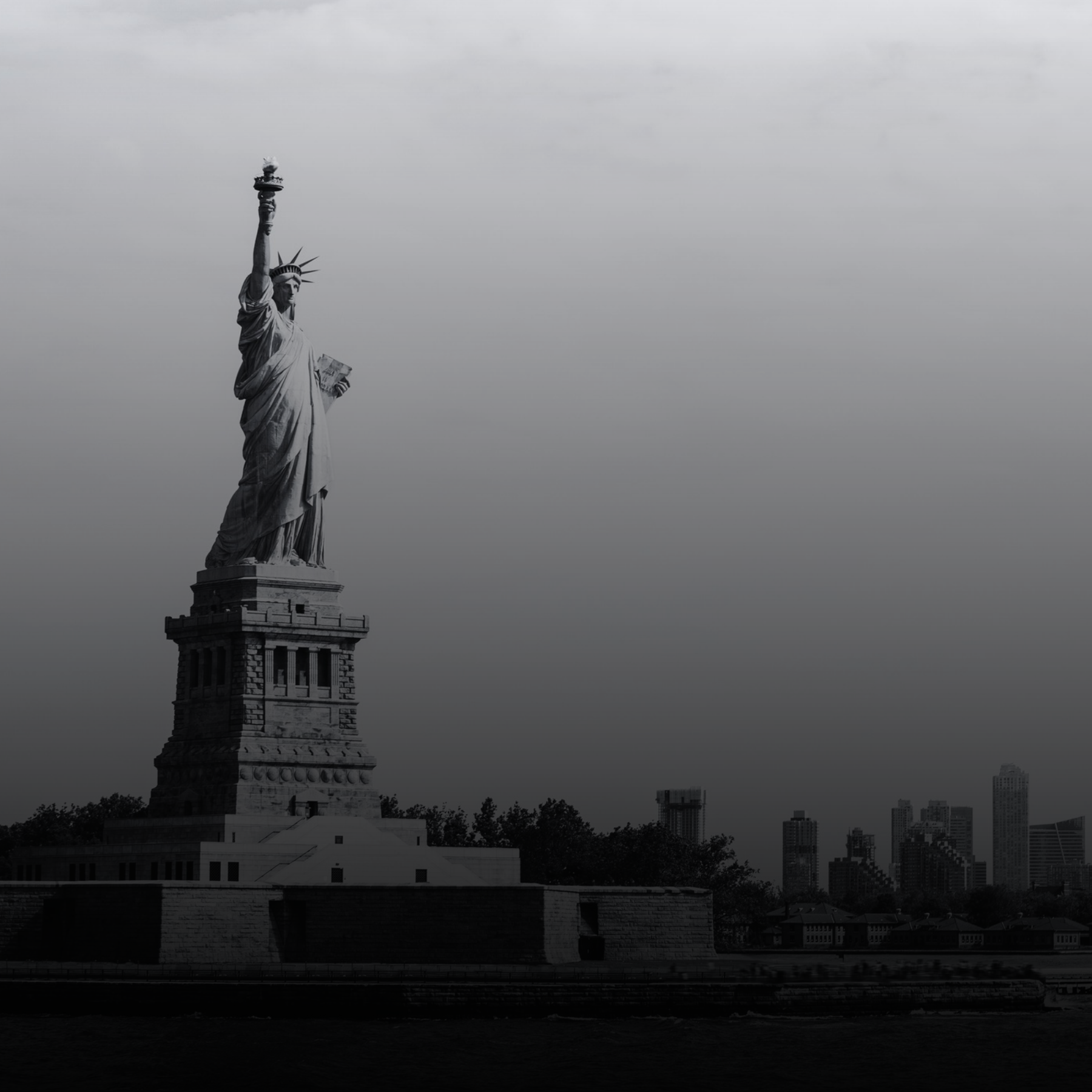
 By the Rev’d Julius Rodriguez, Associate Rector, The Falls Church
Adapted from a sermon given on July 5, 2026
American and Immigrant
As a young girl, I was a Girl Scout and I rode horses. I played on the women’s volleyball team in high school and college. I have fond memories of sharing McDonald’s apple pie with my dad. When I became a mom, I drove a minivan and I took my son to soccer games, karate practices, and swim meets. I served for 20 years in the Armed Forces, dedicated to the safety and security of the nation’s maritime commerce and maritime resource. And I wear yoga pants and shop at Whole Foods. I am an American and I am an immigrant, and America has been my home since I was 3 years old – I don’t know any other.
But I didn’t celebrate America’s 250th birthday this summer. I was not in a celebratory mood. While it’s a momentous occasion and there are grand celebrations all around the country – parades, fireworks, and red-white-and-blue everything – I am deeply conflicted about my own belonging in the land of the free.
Life, Liberty, and the Pursuit of Happiness
It makes me question – what exactly are we celebrating? Independence? Freedom? American identity and culture? The Declaration of Independence of 1776 that set in motion the birth of this nation hinges on the key foundational claim that all human beings are equal and therefore endowed by God with certain unalienable rights, particularly – Life, Liberty, and the pursuit of Happiness. But growing up and living in America has been difficult for me. It’s like living in a dysfunctional home, where on one hand I’m wanted and valued for serving my nation, paying my taxes, being an ethical worker bee in the economic machinery of capitalism – and on the other hand I’m rejected, oppressed, and my human dignity harmed simply because I’m not white.
Exile and Unbelonging
I struggled to fit in and belong in America. As a child, I was humiliated for looking different. People often told me to “go back from where I came from.” In the military, I found a greater sense of belonging, but among a sea of 6-foot-tall men, being 5’2″ Korean woman made me stand out like a sore thumb. Although I succeeded and excelled (even surpassing my male counterparts), I was told in direct and indirect ways that my existence in the military was due to affirmative action and not because of my record of demonstrated high performance.
And today, the denigration of immigrants as undesirables is even more overt – and institutionalized in policies that forcibly separate families, deport them out of the country, or hold them indefinitely in a system of detention centers with abusive and inhumane conditions. Fathers, mothers, daughters, sons, friends, and neighbors – disappeared by the American government without full and fair due process. It’s dehumanizing.
What is at stake is our right to exist, to be free from oppression, and to thrive. Life, Liberty, and the pursuit of Happiness for myself, immigrants, for people of color, my LGBTQ siblings, and anyone who is humiliated for being different – is daily frustrated by the machinations of racism, inequality, and injustice. No matter how hard I try to fit in and belong – show my loyalty and serve this nation – pay taxes and contribute to society – the harsh reality is that I will always be seen as a foreigner that doesn’t belong. And so, on this 250th anniversary of the Declaration of Independence, I feel like an exile in my own home.
Remember Who You Are and Whose You Are
But this is not a new experience for the people of God. The Israelites faced and lived through exile. In these times, it’s ever more crucial to lean into Scriptures, especially Psalm 145. This Psalm was a lifeline to the People of God during Israel’s Babylonian exile – where Jerusalem and the Temple were destroyed and the people taken captive and exiled to Babylon (586 B.C.E). It’s a psalm of praise – which is the last thing you’d want to do when you’re in exile! But there is holy wisdom here. Psalm 145 helps us to focus on God’s sovereignty and who God is. And who God is – God’s character – is revealed in God’s activity in the world, which is defined by grace, mercy, compassion, steadfast love, and righteousness. It reminds us of God’s loving-kindness and faithfulness to his people throughout history. It reminds us of who we are and to whom we belong – the Creator of the world.
Psalm 145 gives us words and voice for such a time when the words of praise are unavailable – when we find ourselves in exile, hardship, or sorrow. It helps us to look to God for help and healing – the One who loves us, and never ever leaves us alone. The reality of the world we live in is that it is harsh – and this psalm encourages us to put our trust not in earthly presidents and princes, or institutions and systems, but in God and God alone.
British writer C.S. Lewis reflected on the psalms and discovered that praise is the appropriate response to the goodness of God – because admiring God is to be awake to the reality of God’s presence in the world and God’s handiwork all around us. And to not appreciate or admire God is to miss out on the greatest human experience – joy. It’s like missing out on the greatest symphony because of tone deafness, or to have never been in love, or to have never been whisked away by a good book. And because God is the worthiest of all to be praised in the world – the more supreme the joy is.
Praise: The Essential Spiritual Discipline in Exile
Praising God is the essence of worship – and it is how our hearts reach out to God and God in return fills us with love, completing our joy. Therefore, joy is possible, even in times of sorrow. Praying this psalm of praise then becomes an essential spiritual discipline in times of sorrow, hardship, and exile. It is this joy, straight from the heart of God, that gives me the courage and strength to persevere in hardship, to be resilient even when injustice comes my way, and to heal when my heart breaks under the weight of rejection.
It deepens my trust in God and matures my faith – this joy expands inside of me – giving me the emotional and spiritual expansiveness – to take in and to understand the truth that compassion and mercy is at the heart of God’s kingdom and sovereignty. That means that God’s not done with me. God’s not done with you. Each one of us is still unfinished works in progress. And those who have rejected me, humiliated me, or otherwise harmed my human dignity – they are also unfinished works in progress, and God has compassion and mercy on them. Therefore, this nation is also an unfinished work in progress.
So, happy birthday, America. I am an American. I still fumble through the “electric slide” line-dance moves, but I have the quintessential American ‘can-do’ attitude. I vote and participate in democracy. And I live in the tension between the ideals of Life, Liberty, and the pursuit of Happiness and the reality of inequality, exclusion, and injustice. While I didn’t celebrate with parades and fireworks this year, I celebrate and praise God’s goodness, compassion, and faithfulness every day – and it completes my joy. And that is enough.