“In a world that thrives on feeding divisiveness, we have come together to offer a different narrative. One that says people of faith – many faiths – from many backgrounds and worldviews – can come together in-real-life and share respectful conversation. Through listening to one another and engaging these texts, we can hone in on our shared civic values, and celebrate our hopes for America.”
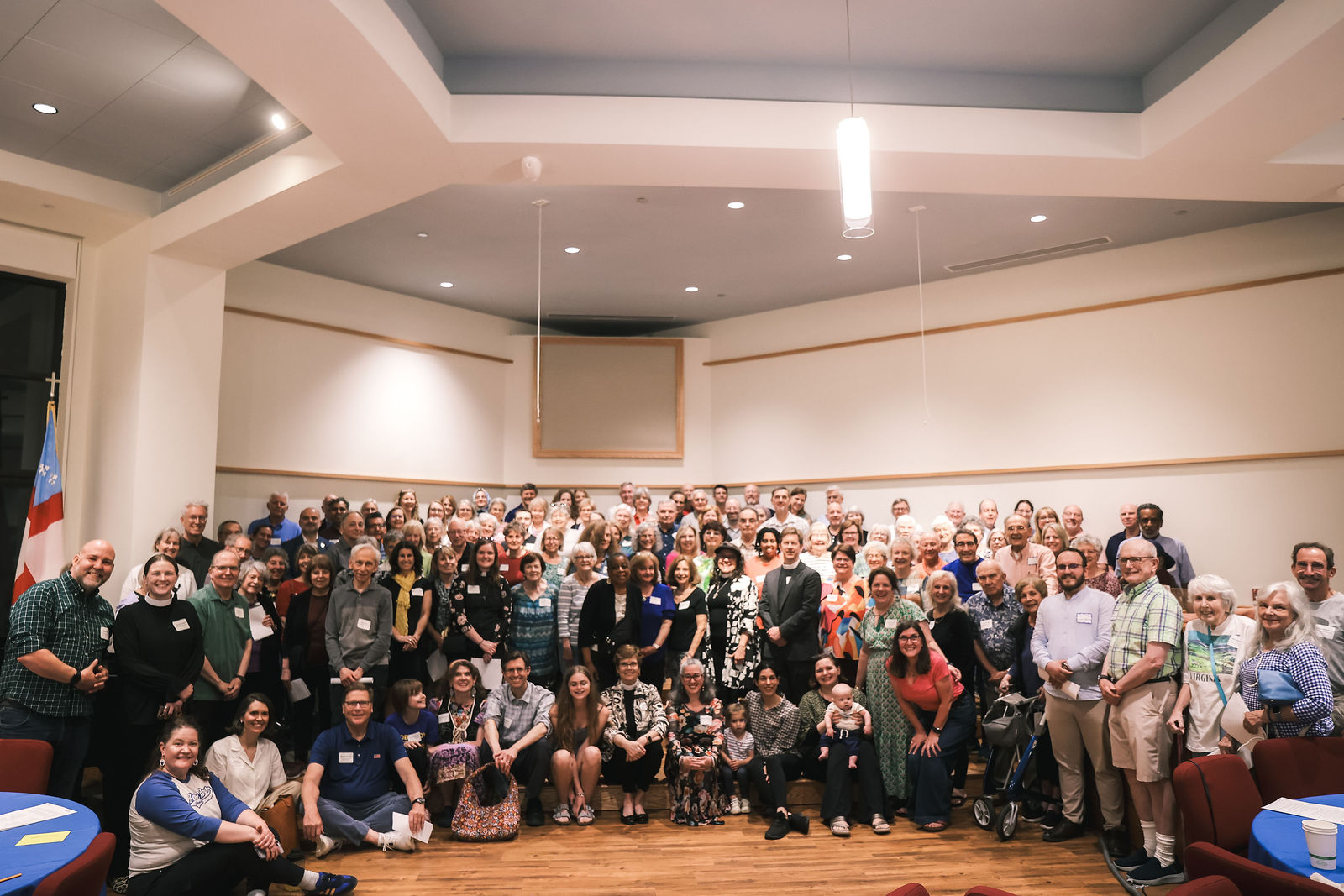
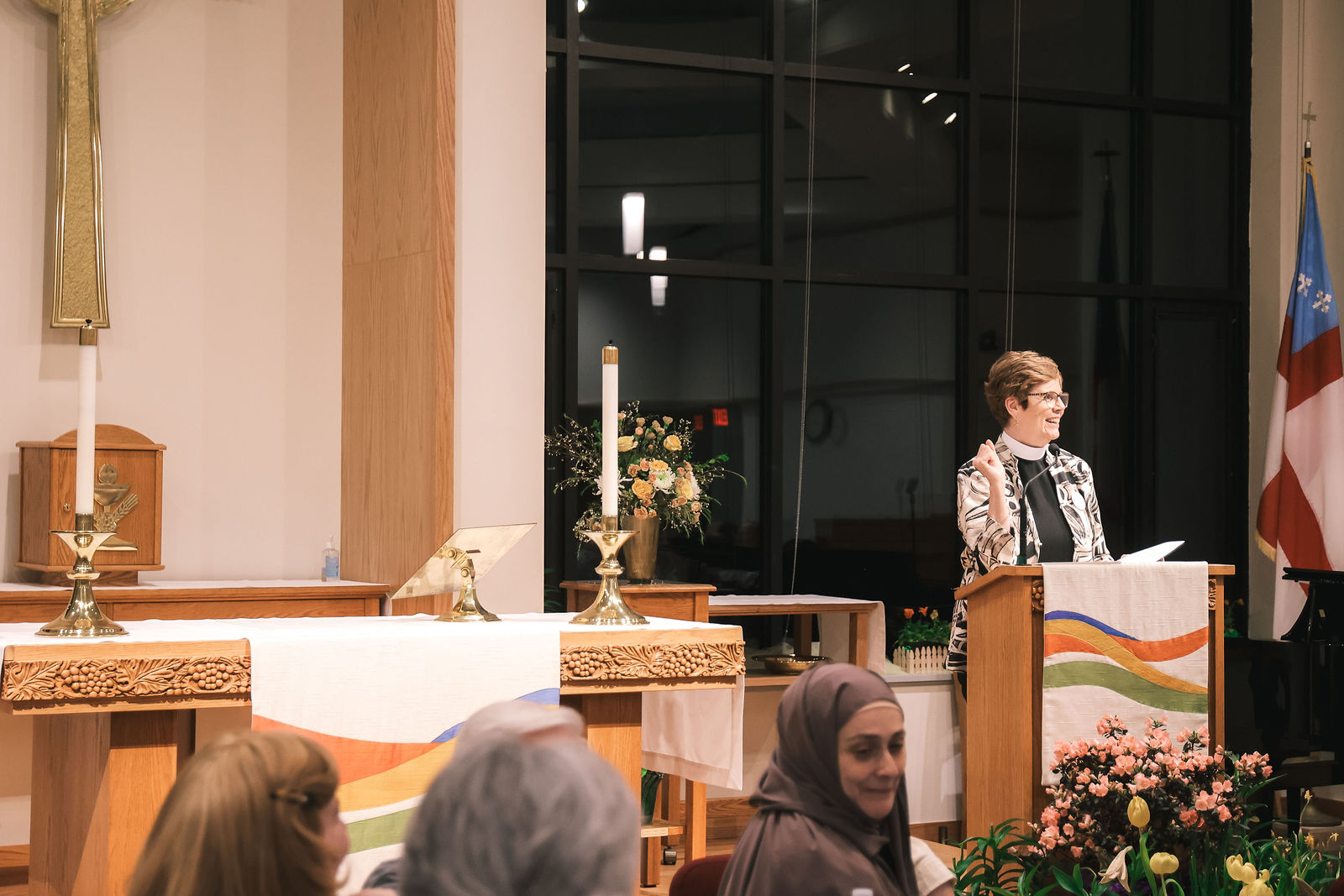
With that opening greeting, St. Peter’s in the Woods Rector Rev. Susan Hartzell recently welcomed 150 people from 17 faith communities to her parish in Fairfax Station. They assembled for Faith250, a multifaith initiative bringing people together to listen, reflect and find connection at a time of deep national division.
As the country approaches its 250th birthday, this interfaith movement aims to help restore unity through reading some of America’s most inspiring and sacred texts and engaging in respectful dialogue. At the St. Peter’s in the Woods assembly, cohosted by St. Andrew’s (Burke), the assembly included Lutherans, Methodists, Presbyterians, the Baháʼí community, Catholics, Church of Jesus Christ of Latter-day Saints, Jews, and Muslims.
“I can think of no greater gift for our communities than engaging in this work tonight – and taking it out into the world with us!” Hartzell told them.
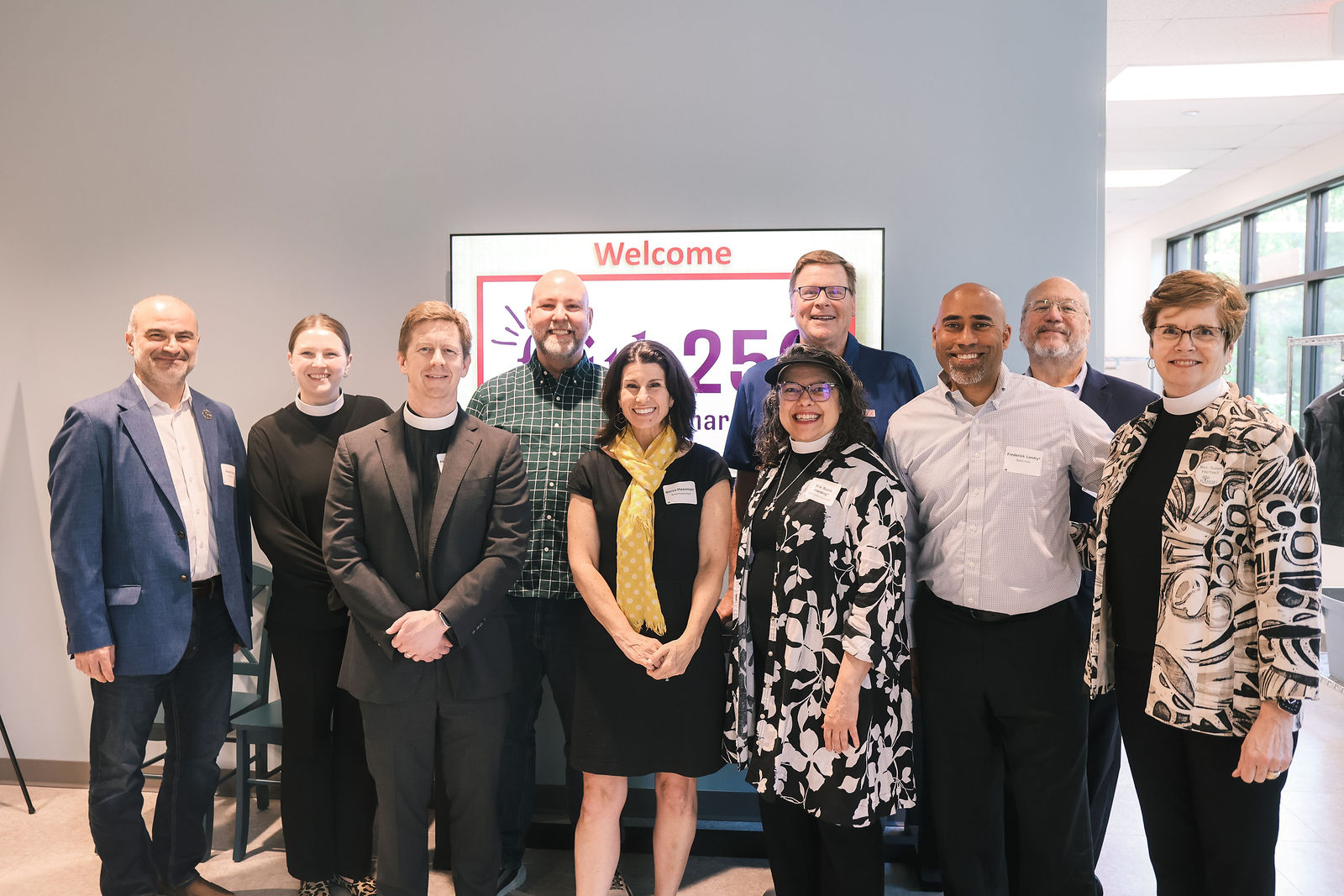
Five Episcopal Parishes in Faith250
In the Diocese of Virginia, five congregations have committed to participate in the Faith250 program:
- Epiphany Episcopal Church (Reston)
- St. Andrew’s Episcopal Church (Burke)
- St. John’s Episcopal Church (McLean)
- St. Peter’s in the Woods Episcopal Church (Fairfax Station)
- St. Thomas Episcopal Church (McLean)
“We all need to open space for dialogue and conversation at the intersection of faith and democracy,” said Dr. J. Lee Hill, Jr., Canon for Racial Justice and Healing for the Diocese of Virginia. “Loving Jesus means loving our neighbors in pursuit of becoming a beloved community, and efforts like Faith250 can help us embody justice and grow as disciples.”
Faith250 grew from concerns about highly partisan events being planned to celebrate the semiquincentennial of the United States. Michael Holzman, a rabbi at Northern Virginia Hebrew Congregation in Reston, launched Faith250 to celebrate America’s birthday by being intentional in building a sense of community and understanding.
The initiative started not long after President Donald Trump announced that the White House would host an Ultimate Fighting Championship (UFC) event as part of the upcoming July 4 celebrations.
“In a time of rising political violence and threats to the institutions of American democracy, this moment is urgent,” Holzman wrote. “The moral thread holding our democracy together is wearing thin. We are losing sight of our shared values.
“What if, through our multifaith networks of local congregations, we spark a movement to counter the division, contempt, and toxicity that threaten to tear the country apart, and instead make this year something unifying . . . a massive community celebration, a conversation about the values that sustain this country?”
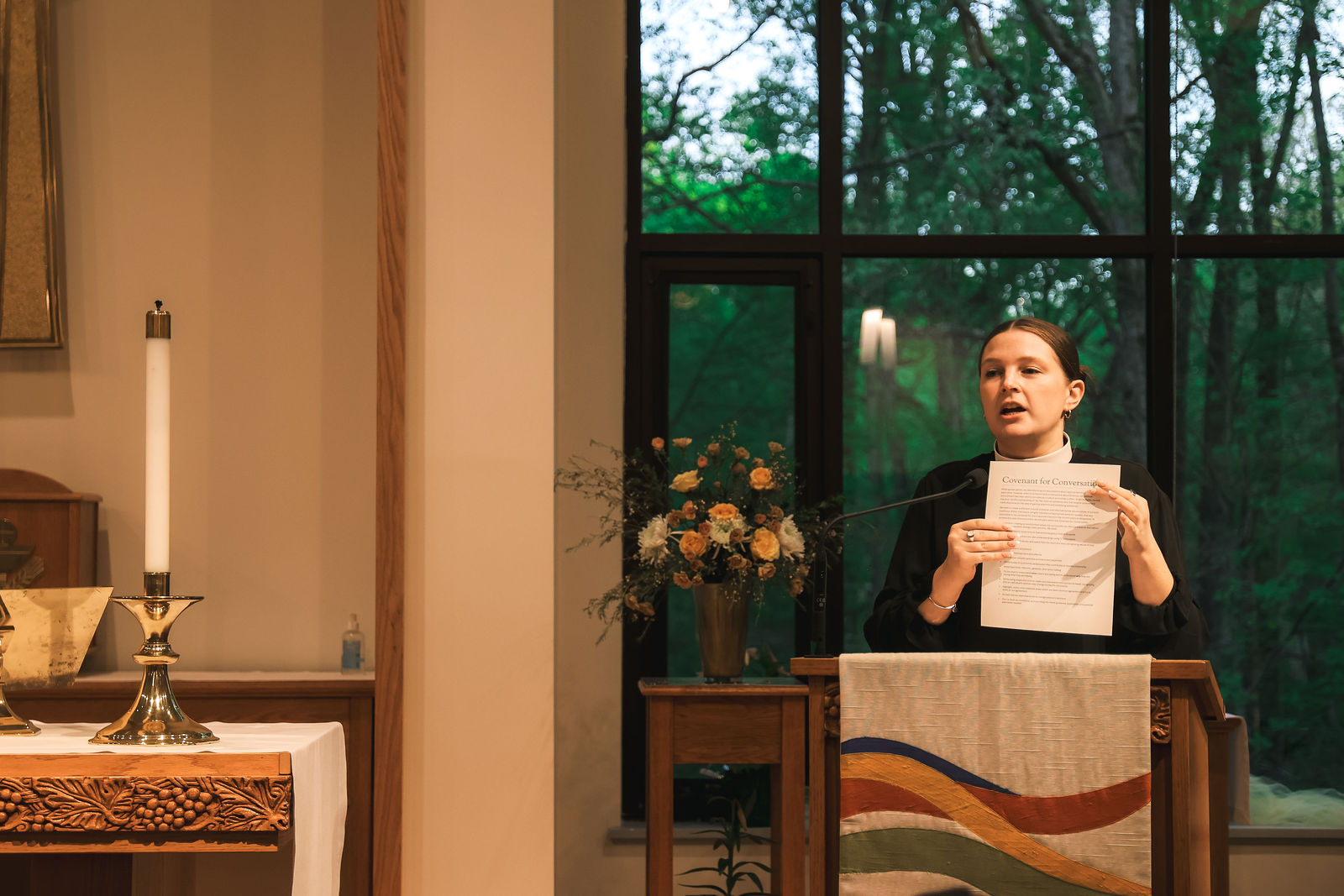
There are now 27 Faith250 clusters across the country representing more than 150 congregations.
“We came from different parties and faiths,” headlined a Washington Post article describing a Faith250 gathering. “We left as compatriots.”
“America the Beautiful”
The cluster at St. Peter’s in the Woods met on April 14 to dive into the text of the patriotic anthem, “America the Beautiful.” The other three Faith250 texts are “The New Colossus,” “The Declaration of Independence,” and “What to the Slave is the Fourth of July.”
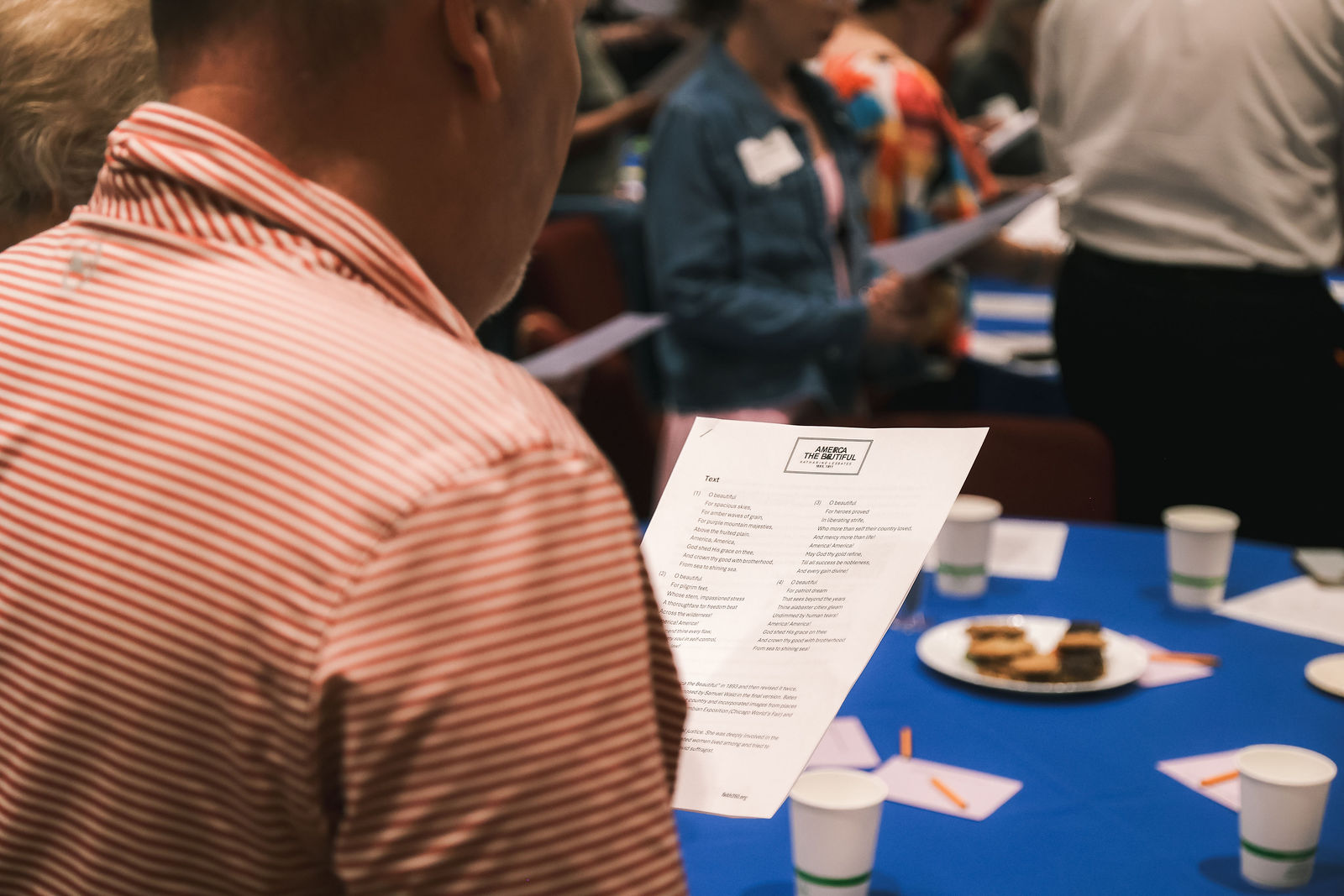
The participants sang together about the purple mountains’ majesty, then studied the song’s four verses, learning about the cultural influences on writer Katharine Lee Bates.
In smaller groups, participants discussed several prompts, such as their feelings as they sang, and how the lyric “nobleness” should affect the ways the US uses national power. The closing reflection question: “How can the physical and moral beauty of your environment help inspire you to better your community?”
The discussions, Hartzell pointed out, uplift the Jewish custom called chevrutah, which literally means study “between friends.”
During the gathering, Ibrahim Anli, executive director of the Rumi Forum, built on the idea of chevrutah. He offered Islam’s tradition of reading sacred text in community, called muzakarah.
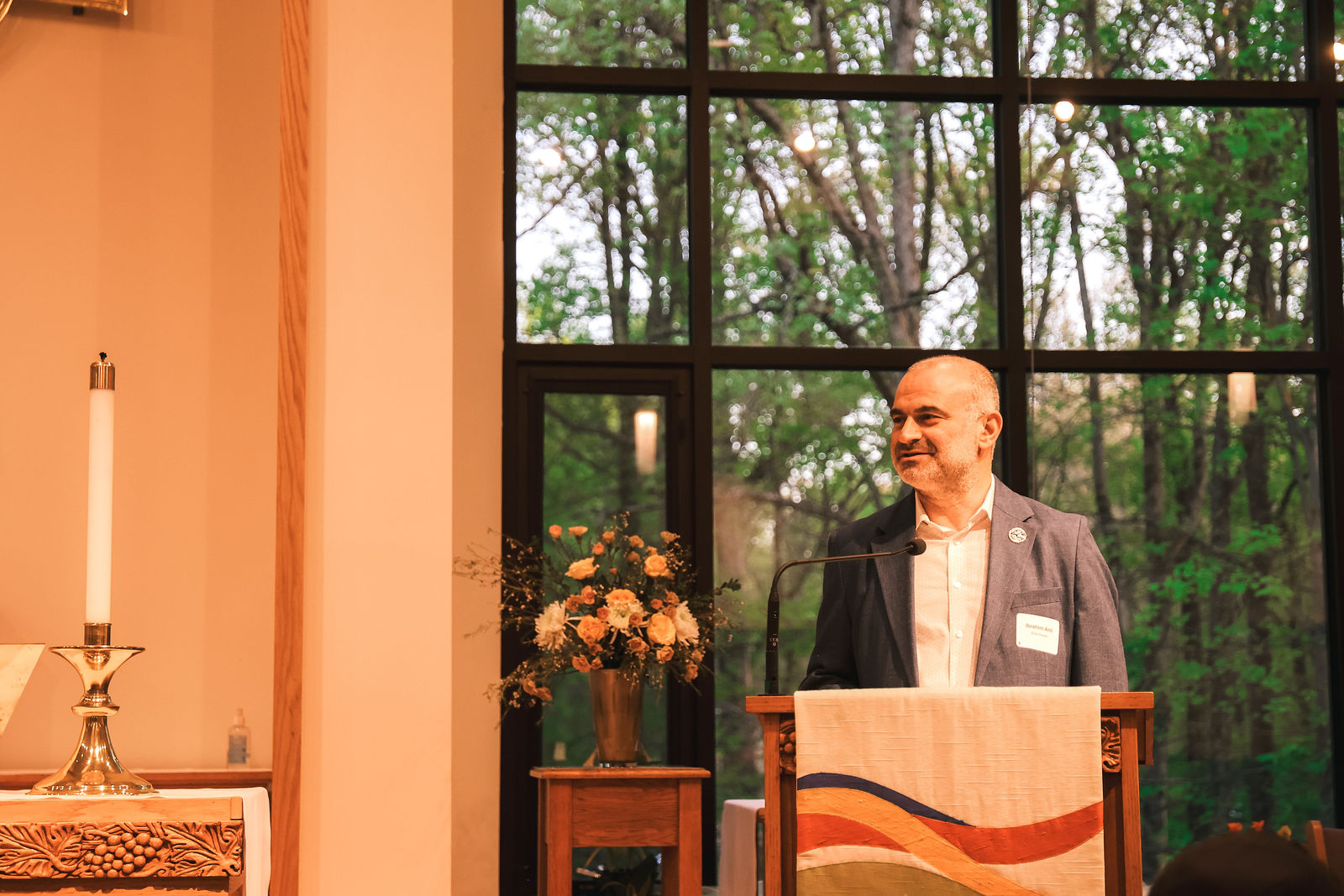
“The word, which translates into English as dialogue, discussion or debate, shares the same root as the word zikr, the Islamic concept of ‘remembering God,’” he said. “The fact that these two words share a common root is profoundly meaningful, reminding us that the Islamic teaching of the collective pursuit of knowledge is a form of worship.”
Anli added: “The ground rule of muzakarah is to be self-reflexive and to refrain from absolutism. Humility and curiosity are essential qualities, and there is always room for new perspectives. Such is the public sphere we enjoy and wish to preserve in the United States—one that thrives through respectful exchange of ideas, upholding freedom of expression and seeking intellectual growth.”
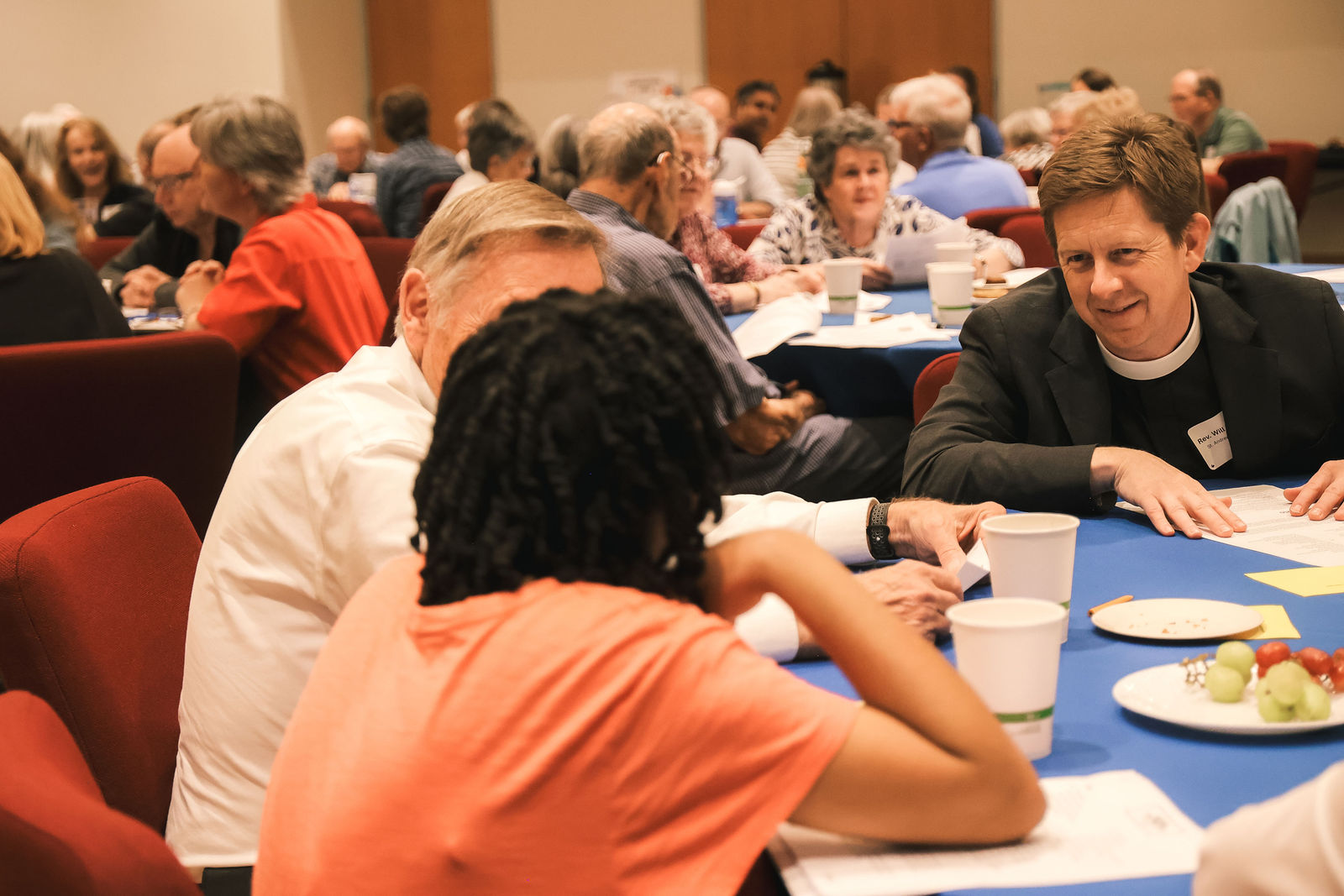
Historical texts speak to what is done and left undone, said The Rev. Will Packard, rector of St. Andrew’s. America, like human beings, imperfectly strives for lofty ideals. Faith250 discussions reveal “common ideals and values at the founding of our nation that we acknowledge that we did not live into at that point and we do not live into them now,” he said.
As Episcopalians, “we promise that ‘whenever we fall into sin,’ and not ‘if,’” he added. “Our Baptismal Covenant requires more than we can fully live into and we individually and collectively seek to follow Jesus Christ.”
Episcopalians also can appreciate the bridge building that can come from loving Jesus, embodying justice, and being disciples.
“It is a testament to our faiths and the original values of our nation that we are able to gather together under one roof,” he said. “Not many years ago, it would not likely be possible for Muslims, Jews, Buddhists, Hindus, Christians, and more to gather under one roof and here we are!”
“Our Table Kept Getting Bigger”
Many familiar faces appeared at this meeting.
“Part of our ‘success’ as a Faith250 group is that the interfaith clergy have been meeting for years,” Packard said. “It began with Congregation Adat Reyim and Burke Presbyterian. St. Andrew’s joined about 20 years ago and St. Peter’s in the Woods joined even before that. Since we have this strong foundation as interfaith clergy, it has enabled us to faithfully approach the Faith250 initiative.”
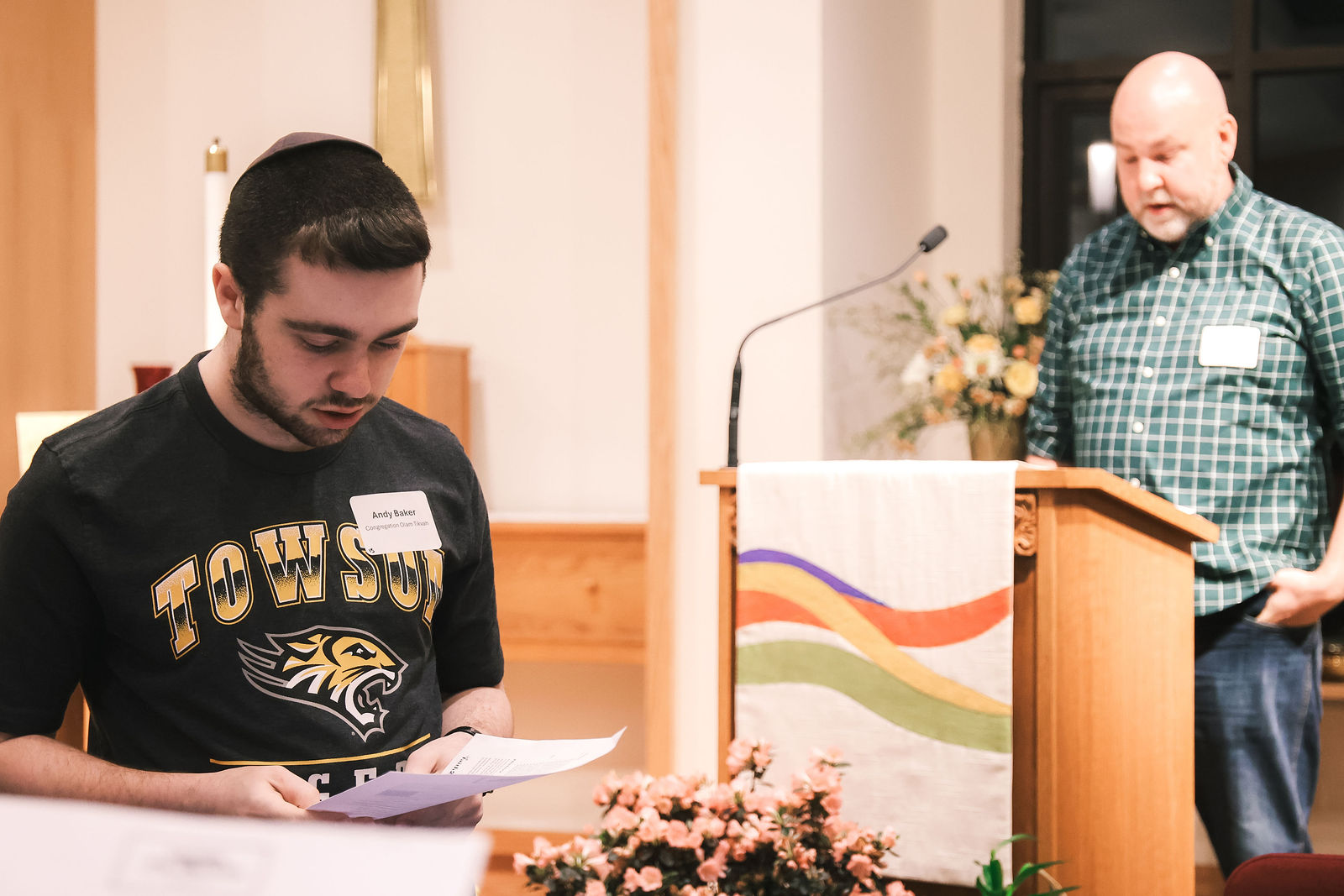
The Rev. Susie Harding, deacon at St. Andrew’s, said a good example of existing ecumenical ties is the annual multifaith Thanksgiving service on the Tuesday of Thanksgiving week. The service showcases a rich tapestry of traditions from diverse faith communities.
In 2025, local leaders of 12 faith communities began discussing participating in Faith250. Aligning their schedules to meet on a monthly basis speaks to the significance and urgency of the goal, Harding said.
“These conversations became so important to us that people (myself included) were prioritizing being present even when it required reprioritizing or rescheduling other commitments that we also considered very important,” she said. “Our table kept getting bigger with more faith leaders from more worshiping communities joining us.”
Bonding Begins with Conversation
This cluster’s first two congregation-wide Faith250 sessions were held at Burke Presbyterian and Congregation Olam Tikvah. The preparation for those fostered closeness among clergy and increased their anticipation for the third assembly, at St. Peter’s in the Woods.
Interfaith collaboration often requires and develops the art of listening, particularly in moments of disagreement. Surprising connections are often made.
In the Burke cluster, Harding said, some participants revealed that they do not consider themselves affiliated with any worshiping community because they were invited by friends who thought they would be interested in the conversation.
“One of our parishioners was excited to tell me after our first Faith250 gathering that she had met a woman at her table group who lives two blocks away from her and they were going to start walking together,” she said.
Faith leaders have also been inviting other congregations to attend events, such as the MLK Day observation at Springfield United Methodist Church whose featured speaker was Willie Mae Pearl King, a member of the executive staff for Dr. Martin Luther King, Jr. Both clergy and parishioners from St. Andrew’s and St. Peter’s in the Woods attended along with other faith communities.
“Maybe, just maybe these conversations can serve as a model that we take into our neighborhoods and beyond as we mark this 250th anniversary of our country,” Hartzell said.
“Great Diversity Makes Us Great”
St. Thomas, similarly, got involved in the McLean Interfaith Cluster “because we are committed to both ecumenical and interfaith work,” said its rector, The Rev. Fran Gardner-Smith.
The parish came into Faith250 with a strong connection to the mosque in its neighborhood and to the temple in McLean. Gardner-Smith has met periodically with interfaith clergy since December to discuss the four texts, and has helped plan broader conversations.
“For me, the biggest takeaway is that our different experiences are less faith-based and more geographic,” said Gardner-Smith, who also has served in Michigan, New Hampshire and California. “A colleague who grew up south of Virginia had some very different experiences than I did, for example.”
As July 4 gets closer, larger groups from St. Thomas will take part in Faith250 discussions with the McLean Interfaith cluster. Meanwhile, the Burke cluster will hold a celebration of the semiquincentennial: an evening potluck at Burke Lake Park on July 1 for everyone who has participated so far. They are invited to share food, conversation and ideas for keeping these relationships going.
“For me, the great diversity of our country is what truly makes us a great nation,” Gardner-Smith added. “So the chance to gather with people of faith across a variety of traditions to talk about some of our country’s foundational texts has been such a great experience.”
New Rituals Around the Nation’s 250th Birthday
Faith250’s website provides guidance and resources for all faith groups to come together and create public rituals around July 4, 2026. Some possibilities are music, food, storytelling, candlelighting, and readings.
According to the Faith250 website, a public ritual “is a visible, local expression of what faith communities can discover together about America’s shared story, offered as a gift to the broader public at the very moment the nation is pausing to mark its birthday.”
Longterm, the most powerful legacy may be one-to-one friendships.
“I believe we will see relationships continue to develop, grow and thrive as a result of the conversations we are having,” Harding said. “People seem hungry for civil discourse and to develop new relationships within the community.”