
What would change if we stopped asking how to include children in worship and started asking what gifts they already bring?
In a recent Pathways to Prayer and Practice workshop, the Rev. Katie Gooch invited participants to shift their perspective from focusing on what is missing to discovering what God has already placed within their communities. The Asset-Based Community Development model (ABCD) begins with abundance — a focus on what is present and trusting that God is already at work.
“Really understanding the idea of coming at a problem from an abundance perspective rather than a scarcity perspective…[was] profound and enlightening,” said one participant.
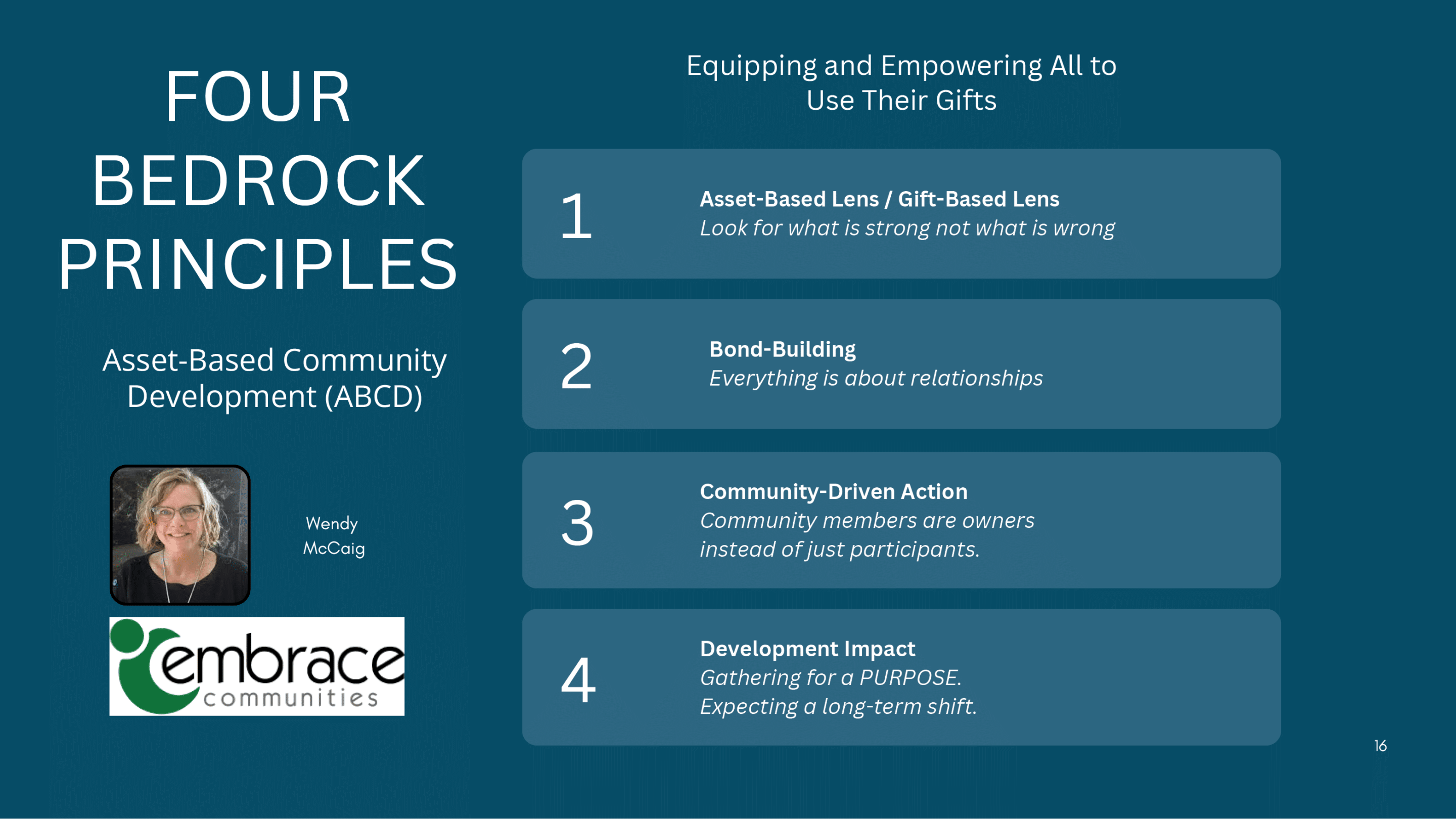
Seeing Worship through New Eyes
Participants shared parts of worship that are meaningful for them: music, prayer, Eucharist, community, connection. The common thread is participation.
Many of our churches carry an assumption that children are present but not central. The opening prayer offered a different vision: “Allow them to come and not only come and sit, but come and feel part of your church.”
A key practice in this work is learning to recognize gifts. Participants named gifts within their own congregations—teaching, listening, creativity, hospitality, leadership, and storytelling—and gifts that children bring: joy, curiosity, creativity, and honesty.
A Tool for Exploring Participation
To make this work practical, Rev. Gooch introduced a simple planning tool with a four-part framework:
- Witness
- Participate
- Engage
- Own
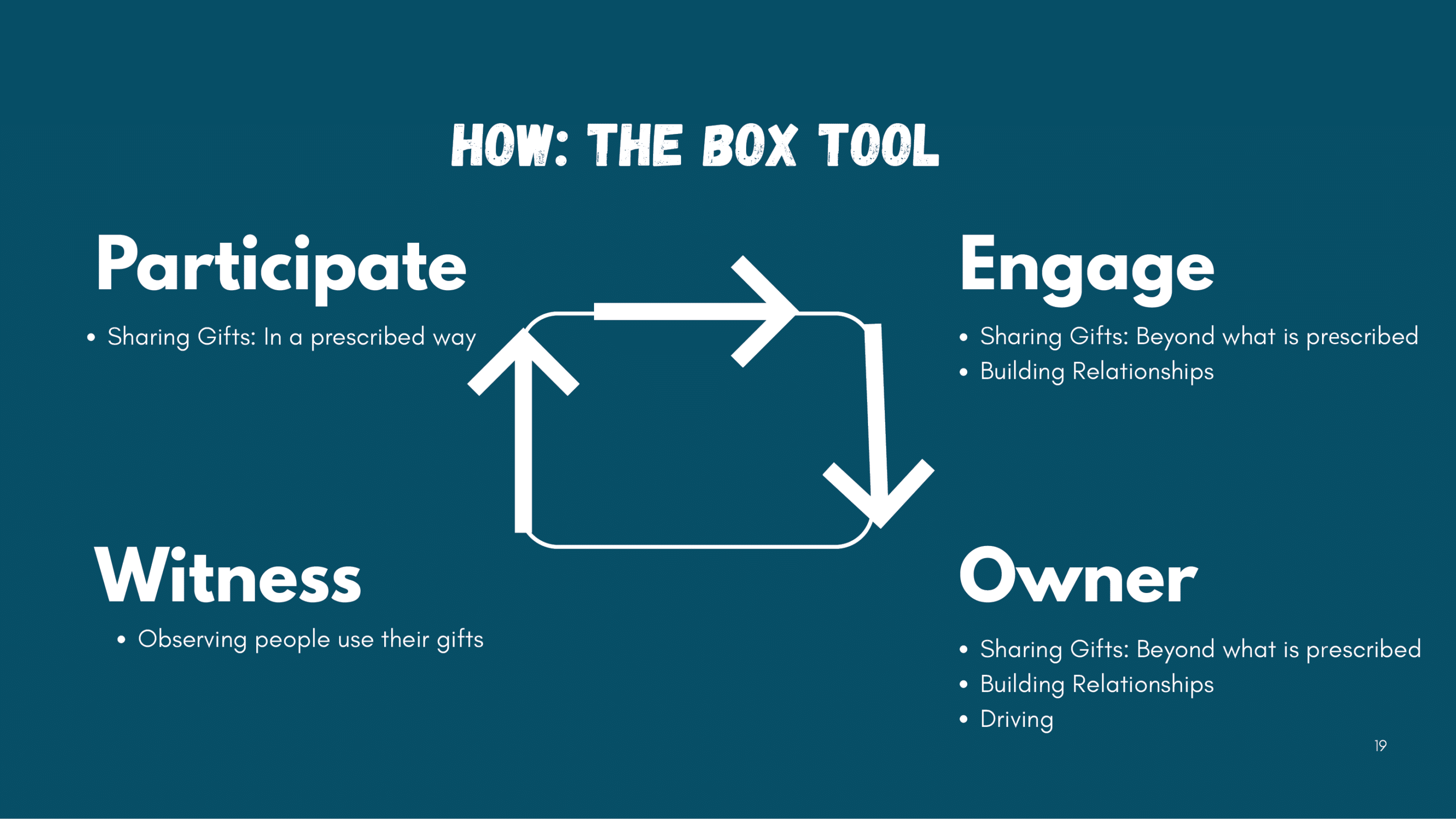
In small groups, participants focused on different areas including acolyte ministry, altar guild, visitor and welcome ministry, prayer, Eucharist, children’s moment, and music. To explore how participation can grow over time, groups reflected on what it looks like for a child to observe, to take part, to become more involved, and to take on meaningful responsibility.
The exercise opened new ways to think about how children can take natural and meaningful parts in worship and an understanding that participation can grow step by step. As Rev. Gooch reminded participants, this kind of work takes time:
“You can’t do this in three weeks… you can’t do it in three months… you can do it in a year maybe.”
How Congregations Can Begin
While this workshop was part of a cohort experience, these practices can be used in any congregation.
- Choose one element of worship or church life. Music, prayer, or welcoming are good starting points.
- Draw four columns labeled Witness, Participate, Engage, and Own.
- Reflect together on what each stage could look like for children in your context.
- Identify one next step that feels realistic and meaningful.
The goal is to notice — to take one step forward.
A Shared Invitation
At its core, this work shifts how we see children in the life of the Church. It is more than welcoming children into the room—it is inviting them into the life of worship.
Children already have gifts. They already contribute. They already belong in the life of the Church. The invitation is simple: make space, pay attention, and trust that God is already at work.